Archive for the ‘Uncategorized’ Category

The following meditation is from Deb Ward, a Broadway Christian Church member and leader of our Stephen Ministry. She makes the clear connection between nature storms and any storm of life and the kind of theology that can interpret them all:

The Lord said to Elijah, “Go out and stand on the mountain in the presence of the Lord, for the Lord is about to pass by.” Then a great and powerful wind tore the mountains apart and shattered the rocks, but the Lord was not in the wind. After the wind there was an earthquake, but the Lord was not in the earthquake. After the earthquake came a fire, but the Lord was not in the fire. And after the fire came the sound of a gentle whisper.

(Kings 19:11-12)

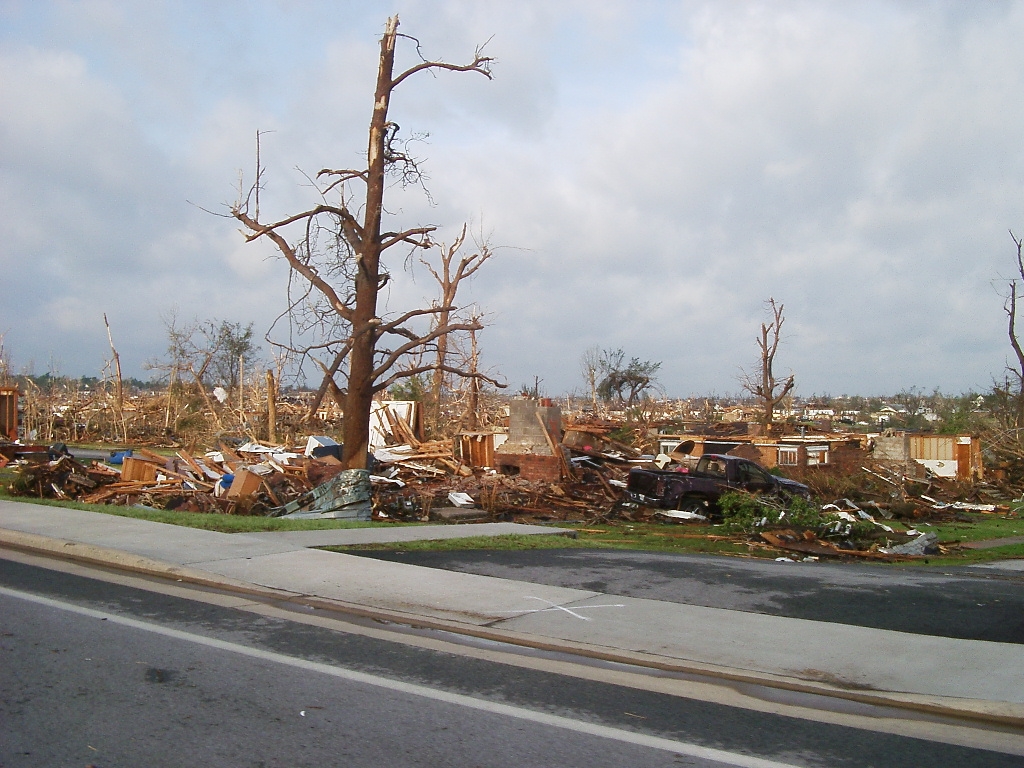
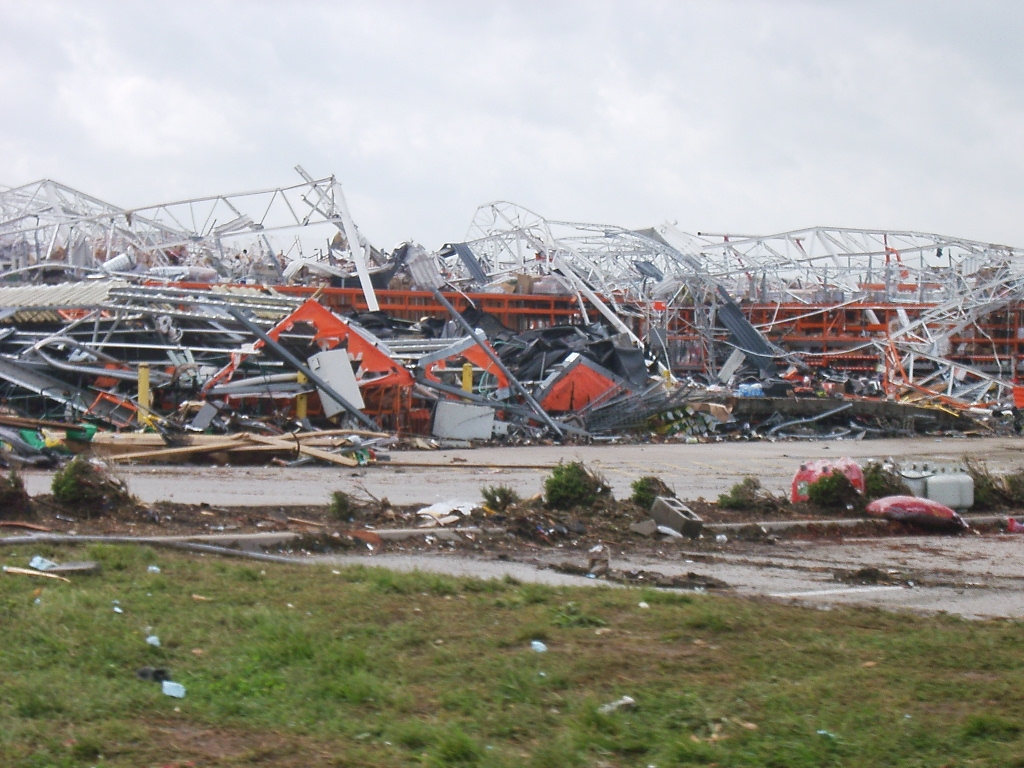
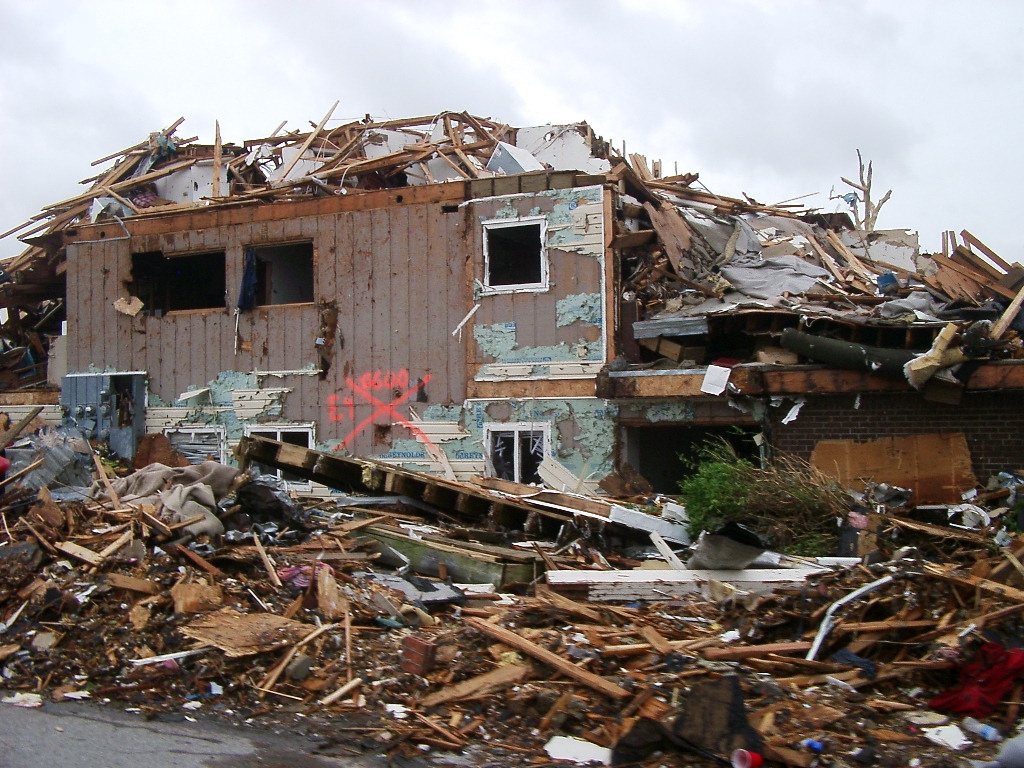
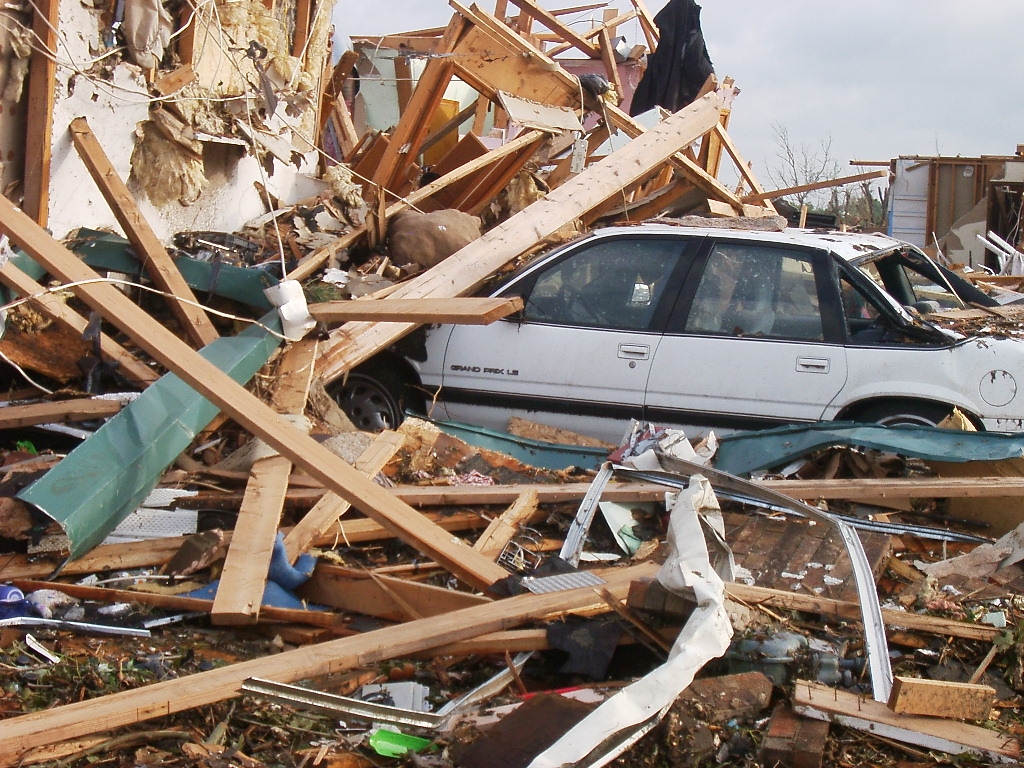
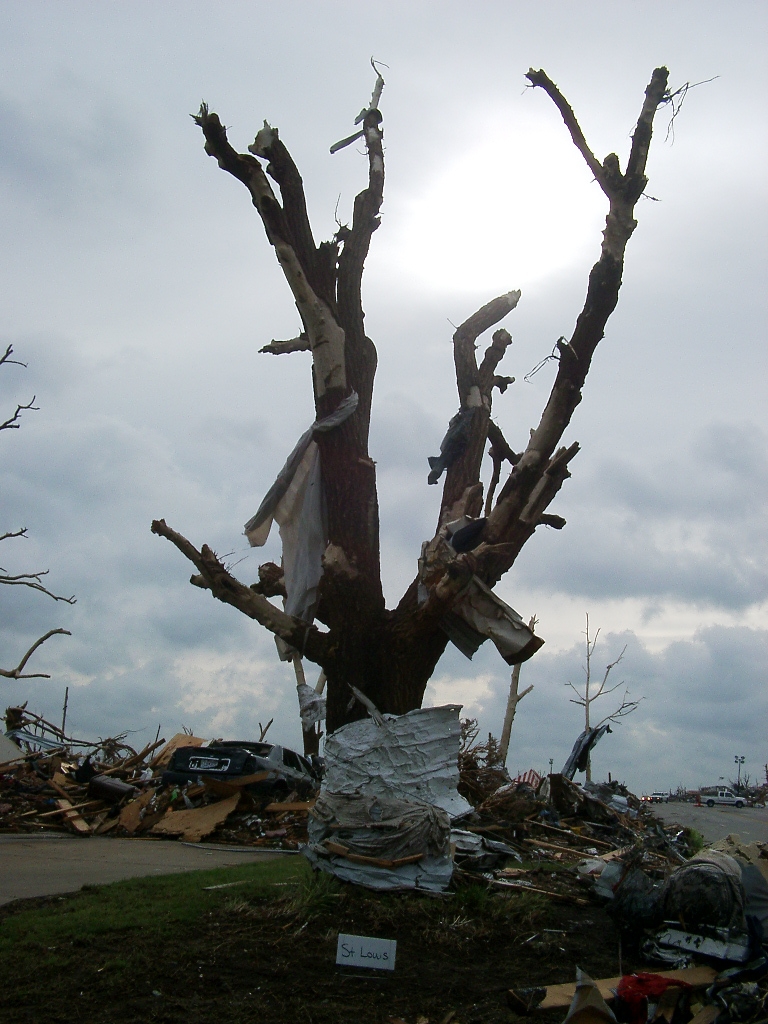
 On Sunday, May 22, 2011, an EF-5 tornado with winds of over 200 MPH dropped down on Joplin, MO, flattening over 800 dwellings, 500 commercial properties, and leaving a death toll of at least 138. Here in Columbia, a safe distance away, we felt the agony of those who lost loved ones, homes, businesses, their workplaces, and their sense of personal safety to the raging, monstrous storm. The sobering reality was that the storm in Joplin, while the worst of the season’s tornadoes, was only one of a number of tragic acts of nature that struck over a three-month period, including the massive tsunami in Japan.

Gathered in our sanctuary, our safe place, at Broadway on the following Sunday, we listened as Pastor Tim related his experience of “being there” for his brother, a Joplin resident, in the storm’s aftermath. He shared photos, told us things the media didn’t, and talked about picking through the rubble of his brother’s business, helping as he could.

Tim reminded us that this storm was not an act of God, but rather an act of nature. God and nature are not the same. Ancient religions could not discern between God and nature, but we can. We know that this storm was not evidence of God’s wrath. God was not in that tornado. The tornado was a random act of nature, not an act of God.

Life brings us many kinds of storms, whether acts of nature, circumstances beyond our control, or situations we help to create. We can feel broken. But Tim reminded us that while the road ahead may be broken by the storm, God brings restoration and hope.

God is not in the wind or the earthquake or the fire, but rather in the small still voice. God is there for us in all of the storms of life. In a world full of uncertainty, God is the one constant we can rely on. God speaks in the gentle whisper that guides us. God is the source of abundant love. God brings comfort and healing. Take needed action. But also be still. Know that God is near. Listen for the small still voice, and find hope in it.

(Based on sermon by Tim Carson, May 29, 2011.)

 Creator God, thank you for your many blessings. We ask that you would comfort the tornado victims in their losses. Help those in storm-torn areas to accept assurances of your love and mercy. As we face the storms of life, help us to calm down from the adrenaline rush that fear brings. Help us to listen so that we can hear your gentle whisper. May we always remember your faithfulness to us and your love for us. ~ Amen

_____________

To read the full manuscript of Tim Carson’s sermon, And the Lord was not in the Wind (May 29, 2011) click here:

http://www.broadwaychristian.net/article292669.htm

Report from brother, Rod Carson, in Joplin – conversations with people who, having taken cover in center rooms of their houses, basements, or storm shelters, emerged after the tornado only to find the entirely unanticipated:

“A common theme among people I’ve talked to who crawled out of wreckage

is the expectation of finding local damage and instead finding total devastation.”

When people voluntarily or involuntarily are thrust into a radical time of change, an event or passage that strips away the dependable structure,  anthropologists like Victor Turner described them as having passed into a “liminal” time. Liminal existence is defined by its “inbetweenness” – the sensation of free-floating, detached, all the balls in the air.

This liminal period can be ushered in by life changes – graduating from school, going through a divorce, entering the wilderness of widowhood, going through war, having a baby, passing through the middle passages of life, and experiencing a cultural rite of passage. But liminal existence also appears in the wake of tremendous disaster. The Oklahoma City bombing, the Twin Towers  and Pentagon attack on 9/11 and now the Joplin Tornado thrusts not only individuals but entire groups of people – like cities and even nations – into social liminality. It is a state of great dis-ease and disorientation, an inability to find familiar coordinates.

When my brother and I stood in the middle of the Joplin tornado kill zone and beheld the stripping of all familiar structures from our sight, we spoke of how strangely inbetween it felt. We, like everyone else, had become, in Victor Turner’s language, liminal beings. Not forever, but most surely for now. Where is something solid on which we may stand?

Today my brother texted me and said that he was finding a way to set up a new temporary base of operation for his work due to the destruction of his office building. And one of the reasons he gave was that he just needed to do something that seemed ordinary, normal, typical. And so we do. People are often surprised to hear that a new widowed person wants to get back to work. But that is not strange at all. We all seek out the touchstones of the familiar. And so it is following the Joplin tornado. This is one of the reasons that houses of worship will be well attended at first. Happy pastors will mistake this surge for a new spiritual awakening. That is not so. After about six weeks attendance will drop down to the pre-crisis levels as people emotionally adjust and return to their old patterns.

As we stood in line on Wednesday, seeking a permit to enter the disaster zone, we did so with many other persons seeking to do the same thing. The only reason they were in that line was that they had either lost a place to live or a business that they owned or in which they worked. We all had a shared liminality at that point. And because of it were bonded together in an unusual kind of way. We talked with others with unusual familiarity, having shared the same tragedy together. Victor Turner calls that new liminal sense of solidarity communitas. You find it all the time. People served in the military together and survived the same campaign. School mates traveled on the same team. And then there are the survivors of disasters or even common illness. There exists a solidarity of the liminal.

It takes a while to traverse the liminal passage. We certainly don’t want the state of being to become permanent, to become stuck there. The word, liminal, comes from the Latin, limens, which means threshold. We’ve crossed the threshold and are free-falling for a time. The encouraging thing is that there is more opportunity for transformation in that liminal space than anywhere else. I can become a new creature, if I allow it, that is.

______________________

For more on liminality see: http://www.amazon.com/s/ref=nb_sb_noss?url=search-alias%3Dstripbooks&field-keywords=Liminal+Realtiy+and+Transformational+Power%3A+Tim+Carson&x=12&y=20

Limnal Reality and Transformational Power (University Press of America, 1997)

Razed Path Through Joplin

On Sunday, May 22, around 5:30 p.m., the worst single tornado strike in U.S. history since 1950 mowed a path through Joplin, Missouri that was at least a half mile wide and six miles in length. Over 100 were killed and many have not yet been located. And since my brother and his family lives in Joplin I drove there on Tuesday.

I arrived in time to hear the story of the past 48 hours from my brother, Rod Carson.

My brother was one of the fortunate ones; his house is outside of town and was not in

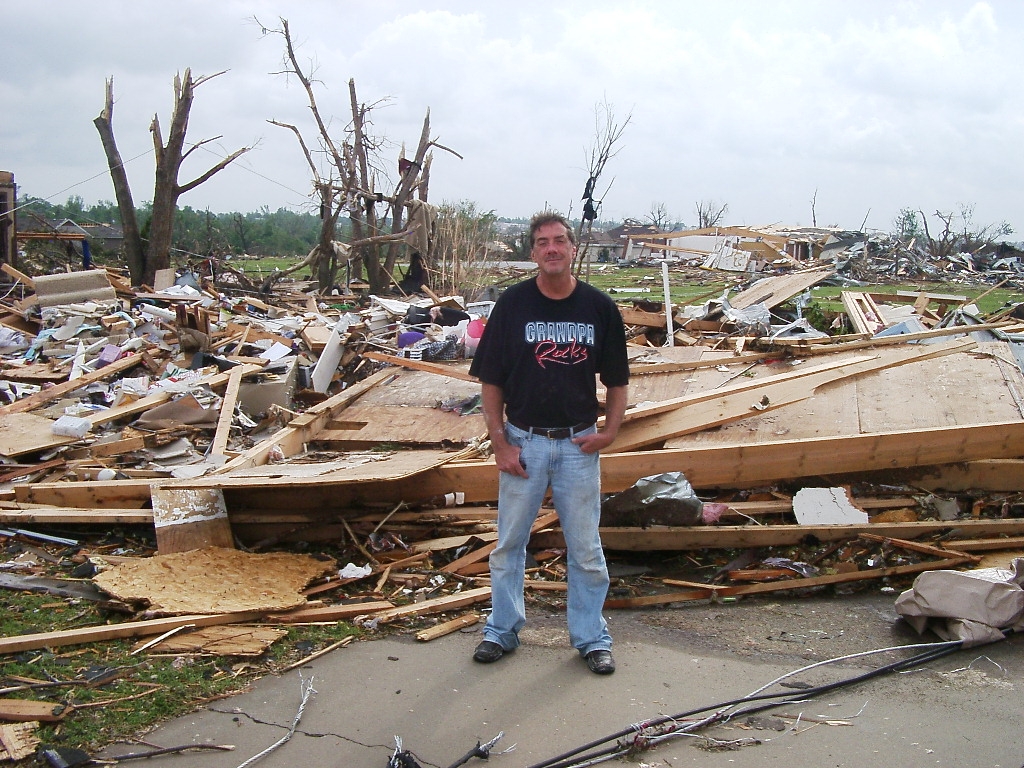
Rod Carson in front of his former office

the path of the F5 tornado. He has well water so didn’t have to worry about the must boil water alert for the rest of Joplin. And he enjoyed electricity, something many other citizens did not have.
The authorities pleaded with people to not go to or return to the disaster zone that Sunday night. So after a fitful night and with first light of day on Monday, my brother and his office administrator found a way toward his Chiropractic office. They knew it was a part of the kill zone and so were not hopeful. Their expectation was confirmed: His office was entirely demolished. What they were able to do was to remove the computers and hard drives, in spite of the broken natural gas lines. Like angels, half a dozen guys from an unknown church asked if they needed help, which they did. They garbage bagged all patient records and passed them, as a bucket brigade, out of the rubble into the back of a truck. The files are now sleeping quietly in my brother’s front room.  The helpers left as soon as they appeared without an opportunity to thank them.

The first responders were awesome. Police and Firemen and their vehicles and equipment arrived from every municipality on the Missouri and Kansas side. Fantastic coordination from Joplin authorities established perimeters and a coordinated search and rescue. By the end of Tuesday, and a curfew that went into place at 9:00 p.m., the search and rescue dogs were withdrawn and the so called “cadaver” dogs took their place – looking for the dead. At that point the security around the disaster site was well established. Wednesday morning would bring even stricter security.
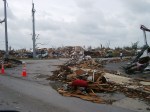
By Wednesday only official workers, law enforcement, utilities companies, and heavy equipment operators were permitted access. Residents and those with commercial offices were required to obtain a permit to return to the disaster area. There were four such permit stations around the perimeter of the disaster zone. My brother and I obtained ours and traveled to the remains of his office. We sorted through the debris, sometimes sharp and hazardous. And we salvaged a few things of value that could be used. When we pulled away from that location it would be the last time my brother would go there. There was nothing to which a person could return.

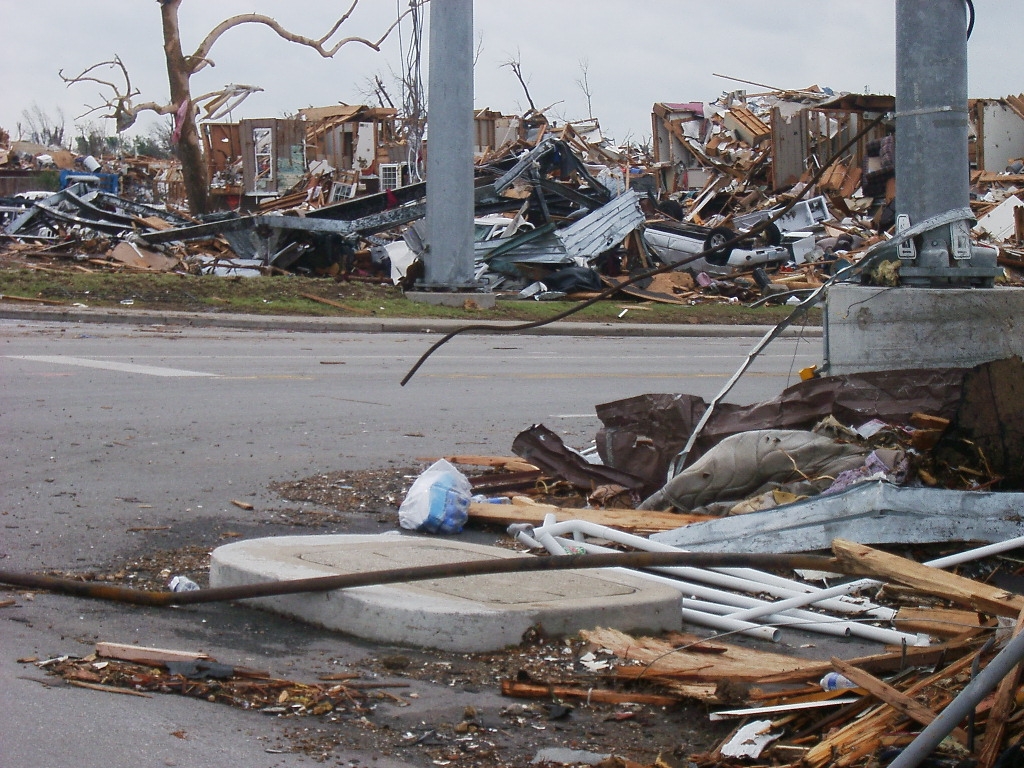
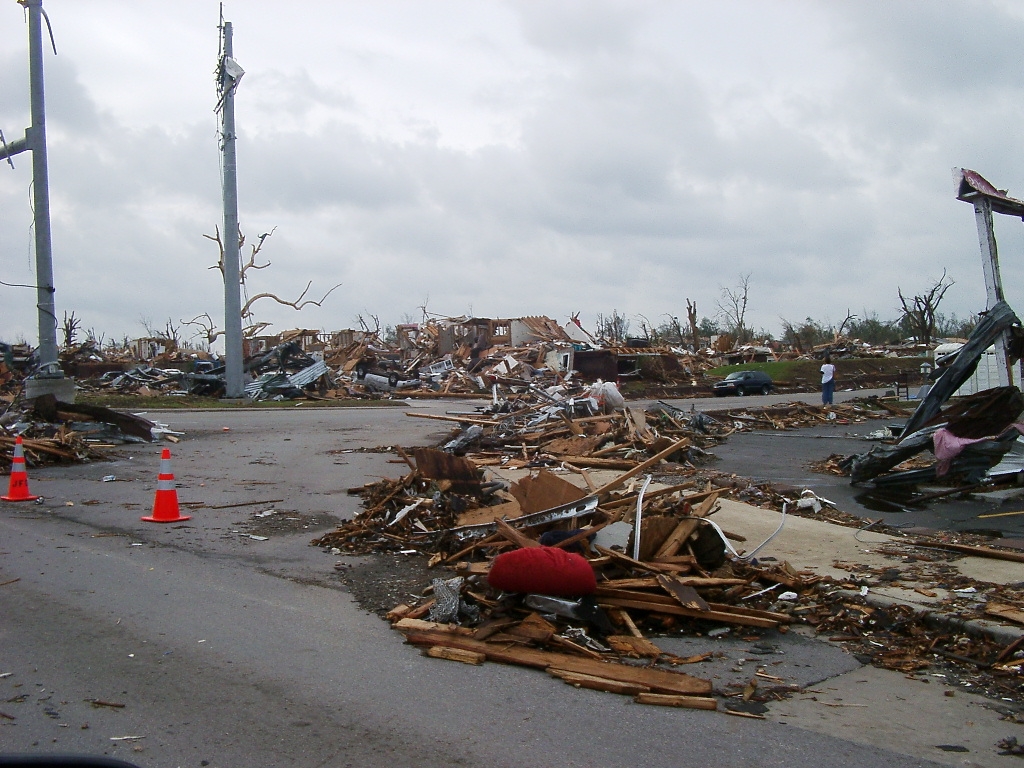
The difference between a Katrina or flood and this is simple: There is nothing left. There is nothing to repair, muck out or make habitable.

Hiroshima without the radiation: It's absolutely silly to think about work groups or volunteer church groups going to do anything. That won't happen, not in the kill zone. The only thing that will happen is this: Over months heavy equipment operators will move the debris to dump trucks and haul it away. Someday, then, people might build on it again.

The only place where volunteers could help would be on the perimeter of the kill zone. Because tornadoes are uncanny in their surgical cut, the edge of the disaster zone is clearly delineated. The houses outside of the zone are intact, though damaged by high wind and buffeted with flying debris that fills their yards. A mile away a neighborhood looks like nothing ever happened. So is the striking life of the tornado.
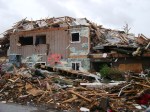
Volunteers were most helpful in shelters for the many homeless. All the motels were full; not even the responders could easily find a room. There were distribution centers established to provide essentials to people who needed them – clothing, personal hygiene items, food, water. Because the high school and two nearby schools were demolished they could not be used. I know for certain that North Joplin Middle School gym was used for distribution. Thank goodness that the high school seniors and their families were not at the high school celebrating on Sunday night, but rather at the community college which was not affected. Some were leaving the college and heading into Joplin when the tornado arrived.

Like dominoes, the needs multiply following the tragedy. If your home is destroyed, you have to secure temporary shelter. The kind you find depends on whether you have family to take you in, money, or access to a shelter. If you have a job, you have to see if your business is still existing and functioning. If not, you’re also unemployed. If you are a businessman, like my brother, you have to find a new office – which we did Wednesday afternoon. More than one person showed up as did we in front of buildings that had “for lease” signs out front.
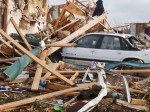
St. Johns Hospital was severely damaged and many died during the tornado. In addition, some of the ones moved across town to Freeman hospital didn’t survive the move. Because they had to do crisis triage, some hopeful ones were treated while others were left to die on the parking lot. Medical personnel poured in from many other communities.

The governor made an appearance, as will the president. These are largely ceremonial appearances, meant to communicate support and solidarity. In times like these all that matters.

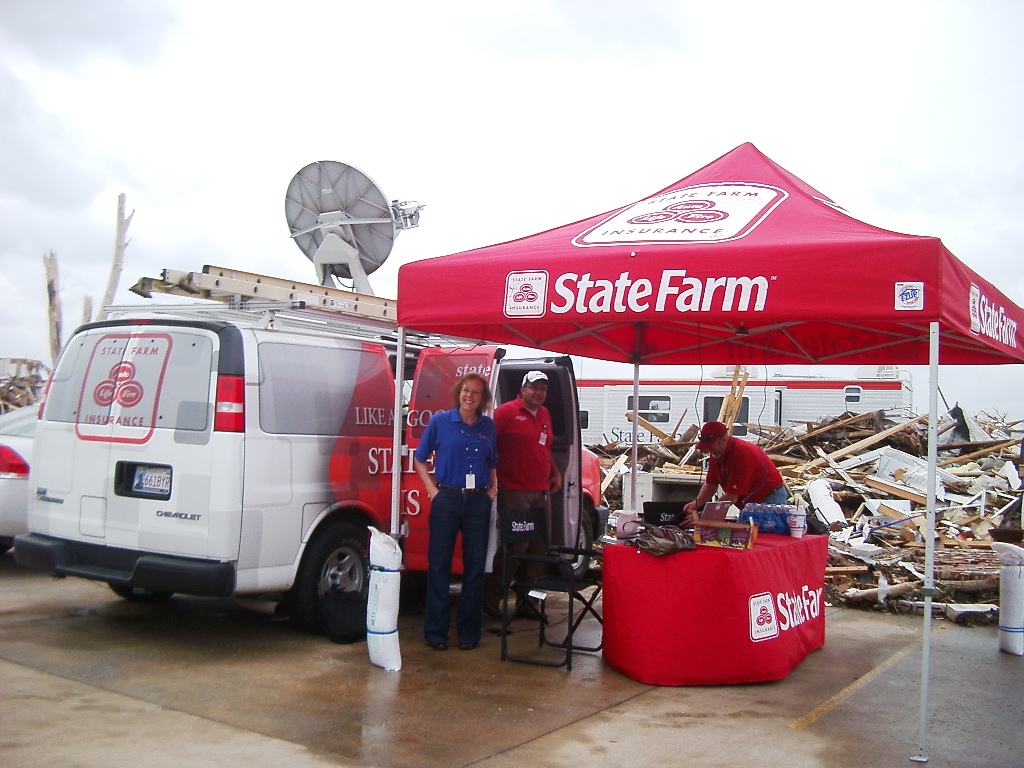
I talked to an insurance adjuster who had set up shop to help people needing to make claims and he talked about some other similar situations. He told me how amazed he was to see everything turned to splinters and then, six months later, the ground be cleared, and then a few years later new construction taking place. It seems unimaginable just looking at the rubble.

So, great thanks to first responders who are the best. Thanks to neighbors and friends who support one another. Thanks to agencies that make it their business to be there when the worst happens.

Our consolation for those who have lost dear ones or don’t know where they are. Our consolation goes to those who had everything taken from them and have no way to replace any of it. Our consolation goes to those who have no way to support themselves and can’t imagine a future.

The shock of this time will pass, like it always does, and beyond rescue and recovery there will be new life on the other side. The other side, however, will be different. Because nothing stays the same after something like this.

The Indomitable Tree of Life
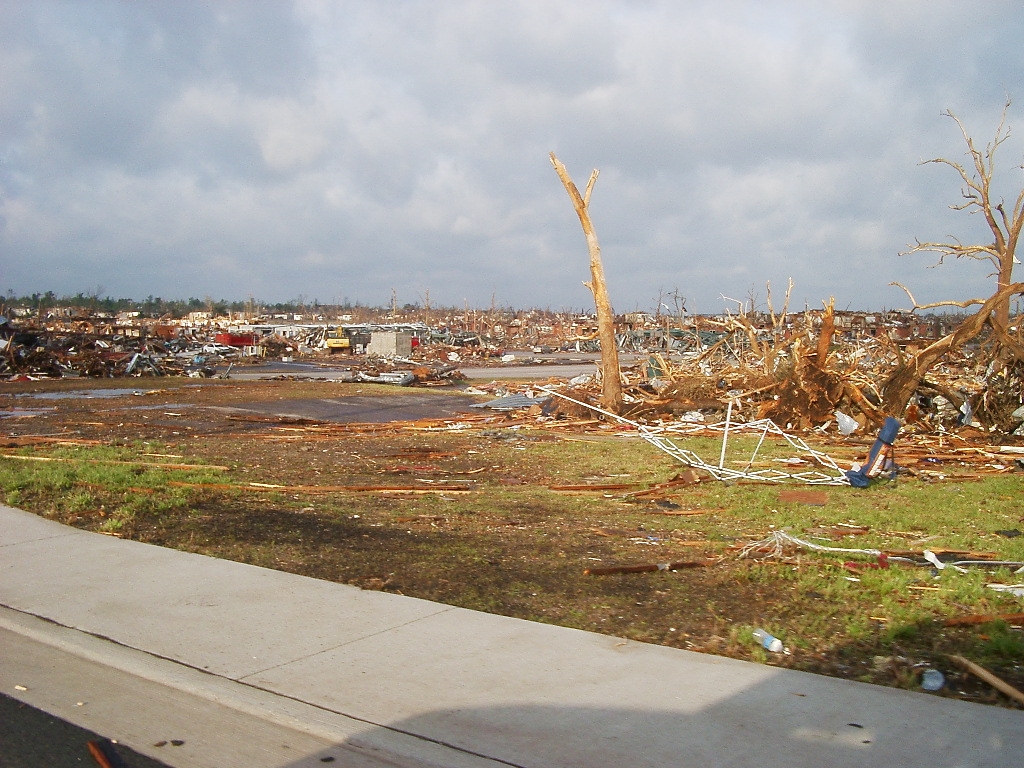
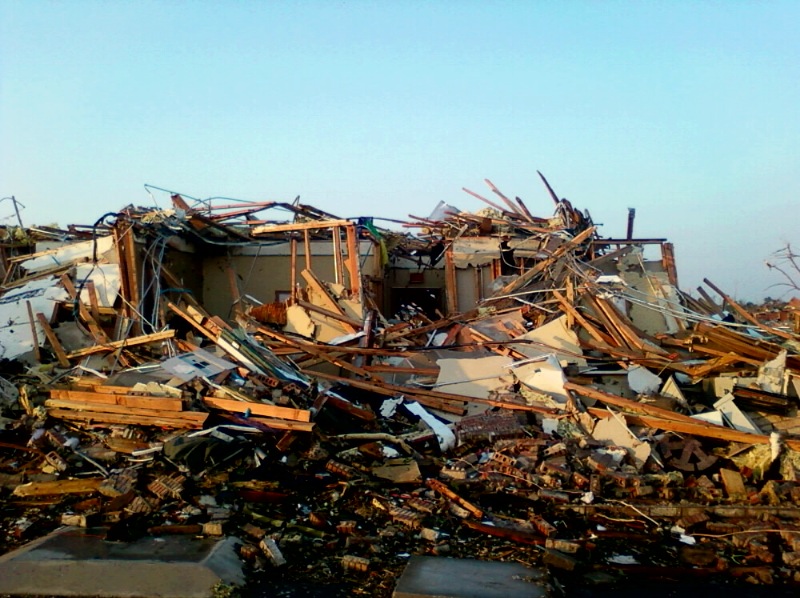
My brother, Rod Carson, lives in Joplin and is a Chiropractor there. He called me last night as the tornado was tearing through Joplin. His house was safely out of the deadly pathway and no one was injured. His office, however, is another story.

The officials discouraged people entering the devastation zone immediately following the tornado, but my brother and his office administrator ventured to their office at morning light. Here is the picture he sent me this morning.

My brother's office in Joplin, Missouri

It’s happened again. The end of the world has been postponed, rescheduled, rained out, or miscalculated. I woke up this morning, May 21, and the world still was. I really didn’t expect otherwise.

Predicting the end of the world is not new; it seems to take place at periodic intervals by various religious movements, popular culture and soothsayers of various stripes. Big time-table events like the turning of a millennium, tend to ratchet up the fever. It happened in the year 1000 AD, and people were on the roof tops dressed in white waiting for their ride.

Truth be told the expectation and disappointment is found on the pages of the New Testament. The earliest Christian writings have plenteous references to the immanent throwing of the switch. For them Jesus played a significant role. The one who was raised from the dead would also serve as the emcee of the big event. What happened, though, was that it didn’t come as they thought. Individual Christians had their personal ends through death before the corporate end of the world happened. And then they had to start making sense of either an indefinite postponement or a different scheme altogether.

The later letters in the New Testament have explanations for this delay with encouragement to not lose hope. And others, like John’s Gospel, finally say in one way or another that the judgment has already come when you encounter Jesus – new worlds have been born and the kingdom has already come. The scholars call this “realized eschatology.” It’s the end game that’s already happened and we live as new creatures because of it.

So you see, this isn’t a new phenomenon. Lots of people throughout history have slept through fitful nights of dire predictions only to awaken to a sun rising like always. And they say, “I guess they were wrong.” And they were. Failed predictions tend to damage the credibility of the predictor.

I don’t expect such an ending in my lifetime, or ever, really. We can, of course, destroy the planet all by ourselves. But that’s not the same as a divine mega-event that transforms the whole picture in a flash. I rather live with the hope that God is already here, pulsing through everything that is, and that the future brings the unfolding of the life of God in the universe. For me, everyday is the end and beginning, and every death and birth the same. God has created and is creating and Christ has come and is present in the mystery of God.

That’s really quite enough for me.

We have been shackled to the past in our policies relating to the Middle East. In addition to the presence of an arms industry that wants to sell lots and lots of military hardware to certain partners in the region, there are other challenges. We must redefine our relationship to both Israel and its neighbors.

Security must be present for all, but so must a reasonable quality of life. This means balancing the needs of both Israel and Palestinians. And once we show a balanced policy in the region we will remove yet another persistent cause of rage in the Arab street. The radicalized mosques and madrases will have one less reason to wage jihad; in their mind, a righteous struggle against those who oppress their brothers.

Good first step: disestablish all the entitled lobbyists who insist on only one way to go about this. We have many friends in the Middle East. It is in our interest and the interest of the entire region to find a a just peace for all the players. We cannot line up exclusively  with one side, especially if that side is seen not only to seek security, but exploit the dis-empowered.

Christian Arabs are fleeing the region for good reason; in the mind of their attackers they are associated with the West. It is a mistaken assumption. But until we change our posture that won’t change. In fact, until we change our posture most things won’t change.

He, a known quantity, honored by his own, dares to take a run for office in these United States.

But he, as a shock to his own kind, says something moderate, unscripted, out of step with the party line, near the center where most true things ride atop the golden mean.

Therefore he, loyalty now in question, is vilified by his own, who ask if he can really be trusted after all.

And he, tossed in a deep pit with others like him, those who think thoughts that are not pasted on the wall of the far extreme, must be suspect.

He should know that moderation is a questionable attribute, just a short step from them.

He should know that balancing all the arguments, both pros and cons, is a sign of weakness.

He will beg for mercy, forgiveness, from those who will line his war chest, sing his praises to the masses. Go ahead, grovel. Take it back. He really didn’t think those original thoughts after all. Those words were impulsive, the fruit of poor judgment.

He and he and he surf the polarized madness that is our homeland, surf the big curl crashing on the  shore, as the real answers to the real questions sit quietly waiting to be noticed, waiting not for a he at all, but much more.

So my daughter and I have discovered online chess. It’s not that we will no longer play face-to-face; we will. But this is a nice way of playing and interacting when are absent one from the other. The difference between this and emailing, texting, IMing is that we are, well, in a game. But a game is different online than hunkering over the same board, watching chess pieces bite the dust.

I like both forms – face-to-face and online – for some of the same reasons, but different ones, too.

There is the game – its essentials, tactics, and interplay – and that is present in both venues. But the online version (the one we play) allows for extended time. We can start a game today, let the partner know we will be out of town for a day, and resume when we return. Or continue in the hotel room that night. Somehow you know the game is still on, even when you’re not at the board. That’s  a nice feeling, to know that the game is still on.

And that’s something of what I experience with everyone I know and cherish, that the game is still on, even if we’re not interacting at the moment, or for days, and with some people even longer periods of time. Then there is reunion and we make a move or two. The game is on and has been.

Of course, that’s God. The unending game, whether we’re consciously playing or not.

Check.

Oops. I’ve got to go. I’d better keep my head in the game.

Much just is

and much we make

from given fragments

and junk create