Sometimes a poem is crafted in such a way that it speaks to all times as well as particular times. Such is the case with Tablets VI written by the Iraqi-American poet Dunya Mikhail. This is universal verse accomplishes much at the same time, such as telling the story of violence in Ukraine as well as stating reoccurring themes familiar to us in the Christian season of Lent. These excerpts point to all these and more.

When the sun is absent

the flower misses her

and when the absence grows long

the flower looks inside herself

for another light.

I am the plural

who walks to you

as a singular one.

Before you shoot someone

remember their mother’s eyes

will follow you wherever you go

until she drowns you in her tears.

They didn’t like his idea

so they shot him in the head.

From the hole the bullet caused

his idea will reach the world

and unfurl like a climbing plant.

Only one heart resides

in each person

but each is a train full of people

who die

when you kill

what you think is one.

The trees, like us,

resort to their roots

in times of danger.

During the pandemic

we are a forest – trees

standing alone together.

What if the guns

turn into pencils

in the hands of the soldiers

and they underline

the places on the map

as sites they must see

before they die?

One of the doctrinal projects of medieval Christianity was to identify and catalogue the deadliest of the sins. This all fit with their heightened reward-punishment system which we don’t have time to get into now. Suffice it to say that if you have a system based on sin/repentance/confession/penitence you need a list. Who makes the choice as to what’s on the list and if there should be a list at all is debatable.

But there was a list. A list of the seven deadly sins. These were the sins that could twist the soul in such a way that it is hard to find the original godly image cast there in the first place. You should flee the things on this list like a sailor swimming madly away from a sinking ship.

One of them was gluttony. Not every religious tradition identifies this as deadly, but most discourage excess and extreme indulgence. For example, if you’re a Buddhist, you know that indulging the senses is flight to a world of illusion. Christians, too, know that you shouldn’t confuse needing your daily bread with binging on it. You end up worshipping the wrong sort of god.

One of the things that cemented gluttony into the seven deadly sins list was the ancient practice of upper class Romans for whom conspicuous consumption was an art form. Anything worth anything was worth doing to excess. Food was no exception. Their lascivious bacchanals made use of vomitoriums. When you got full you voided so you could enjoy the whole thing all over again. Christians found that practice an affront to any kind of moderation, a misuse of the gifts of food, an indulgence for indulgence’s sake. Especially when other people went hungry. Gluttony made the big list.

Of course, gluttony is not an eating disorder. When a person is sick with bulimia they eat and purge for a altogether different reasons, a compulsion related to body image and a desperate longing for social approval. That’s not gluttony. It’s not on the big list. It’s on another list of how we get broken and and need to heal.

For many who can, America has become a culture of excess. We have more of everything than anywhere on the planet. We gather mounds of stuff around us. Even the poor take their cues from this, hoarding mounts of useless stuff just to be surrounded by mounds of something. So they can point and say, “Look at all that, there’s lots.” We have so much excess and are so used to it that whenever we can’t have whatever we want at the moment we call it a crisis. We actually whine. Have you heard people whining in the store aisle because they couldn’t find their favorite brand of whatever when twenty-five other brands are stacked up staring them in the face? Oh my, such deprivation.

Our gluttony is most usually different than a Roman strolling down to the vomitorium. Our gluttony has to do with an expectation for ease, immediate gratification, and, yes, excess. Where else in the world has a diet culture industry emerged around excess and accompanying remedies for the consequences of excess?

When gas prices raised at the pump because of a combination of supply and demand, the price of crude, and sources interrupted as a result of the Russian war on Ukraine, people howled. I grimaced every time I filled my tank. That was noticeable.

The root cause of our indignant response at the pump, though, has to do with our conditioning as gluttons. We’ve been drunk on cheap gas. And because it has been so relatively cheap compared to anywhere else in the world, we’ve binged to excess, roaring down the vomitoriums of our highways with impunity. I’ve been one of them.

From a spiritual point of view, we have to say that this kind of excess is bad for soul. A real spiritual practice includes intentional simplicity and better stewardship of the gifts we have been received. But that’s not really what has made our gluttony on gas the sin that it is.

What has really earned this form of gas gluttony a prominent place on the seven deadly sins list has to do with its consequences. When we indulge like this we also cause other things to happen, things related to our gluttony.

We gorge ourselves on fossil fuels to the detriment of the ecosystem itself. The proof of our gluttony is revealed when the gas supply chain is interrupted and prices soar and we don’t ask ourselves how to achieve more moderation, how to move with dispatch away from reliance on fossil fuels toward other energy sources. No, we double down in an act of gluttonous rebellion and insist that the answer to our dilemma is more drilling in protected reserves, off shore drilling, and running pipelines across indigenous lands. That is the glutton’s solution – finding other ways to stay a glutton. Violate anything to have as much of what we want at the price we want whenever we want. The bacchanal of American addiction.

Of course, our addiction on oil has led to war after war. We fight to protect oil. We arm ourselves to have it. We send people off to die so we can pump it without reserve. We allocate enormous shares of the Federal budget to having an oil-protecting military at the ready. An addict will do anything to have the object of his addiction.

But that’s not the only consequence of our gluttony on oil. Our gas gluttony has financed and enabled oil-producing regimes like that of the Russians and the Saudis. We fill their coffers so that their autocrats may have all the power they desire at their disposal. We have funded the Russians in their siege of Ukraine. We are the Russian enablers, even as we push other after-the-fact sanctions. A glutton will get his junk food at any cost.

Any one of us can construct a seven deadly sins list and include the practices that utterly twist the soul, violate the neighbor, and distance us from harmony with our god. Our lists will probably be different and have different accents and emphasis. They will reflect the values we hold dear and identify those things that tear us all down.

For my money, I’m keeping gluttony on it. Because gluttony has to do with appetite, and the unbridled appetite to consume, possess, and take at any cost may be the most dangerous sin of our time.

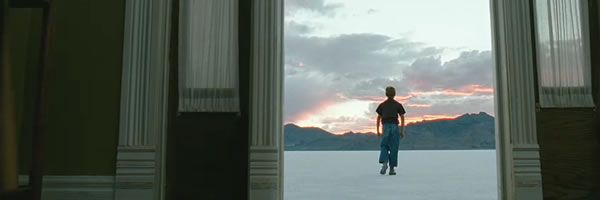
The Tree of Life is a 2011 American art film written and directed by Terrence Malick. The film is extended reflection on life, death, the nature of existence, suffering, love, loss, memory, family, parenting styles, gender roles, trauma, notions of God, piety, the tension between nature-based faith and traditions of redemption, the will to power, and how little lives are set against billions of years and infinite space.

At the least it is an extended reflection on Job 38, which is cited at the beginning of the film.

The cinematography is unparalleled. The character development is stunning.

Though you have to want this film to stay with it, the all-star cast helps.

Go ahead. Stream it.

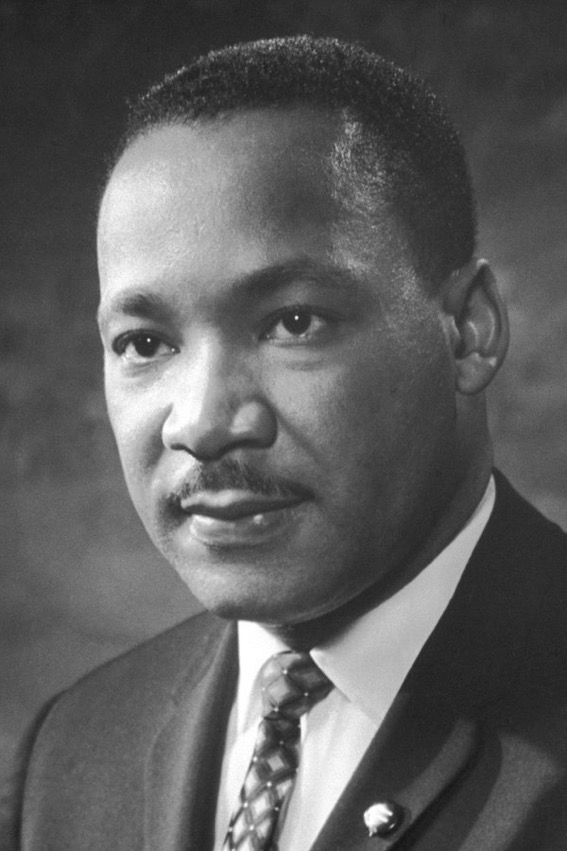
Great persons of vision and leadership often deserve commemoration; we place them on national calendars with their own days, design educational events around them, record their words and restate them at important moments. Some get their faces on currency. Or a bridge named after them. So it is for Dr. Martin Luther King, Jr., one of the foremost leaders of the civil rights movement in the United States, whose national day we celebrate today.

King is often remembered for the I Have a Dream speech which was delivered on the steps of the Lincoln Memorial on August 28, 1963. His words recalled Lincoln and the Emancipation Proclamation. The dream he described was for an America which transcended the sin of racism and marched toward a brighter day. It is that speech we most often hear recited on this day we remember him and the ideals for which he stood.

It is also a day in which his message is turned upside down by those who oppose everything he stood for. This day is notorious for cherry picking; selectively choosing the words that espouse unity while avoiding the call to justice and equality. Though his speech included invectives against racism, segregation, discrimination, voter repression, and police brutality, and insisted that justice should be made a reality for all God’s children, those ideas are often avoided. What are quoted instead are these: “little black boys and black girls will be able to join hands with little white boys and white girls as sisters and brothers.”

White folks, by and large, like to tame King. They like the non-violent, Gandhi-inspired change agent, which he was. But they do not like the prophet of Biblical proportions. One, but not the other.

This day, of all days, is given to the whitewashing of Martin Luther King, Jr.

We will not hear his words from the Birmingham jail, asking where the white preachers are, reminding us that the silence of our friends is the most damning sort of abandonment. We will not hear that he opposed the Vietnam war, or pressured LBJ on every piece civil rights legislation, including voting rights. We will not hear that the ultimate measure of a person is not where they stand in moments of convenience and comfort, but where they stand at times of challenge and controversy. Will will not hear that injustice anywhere is a threat to justice everywhere. We will not hear these things.

What we will hear is that we should be nice, that, gosh darn it, we should just get along, that we’ve made lots of progress so that should make us pretty happy. It’s the anti-King message, the taming and whitewashing of King.

All around the country today those who oppose King and his message will be quoting him in order to appear as though they are great fans. They do the same with John Lewis of blessed memory. We were buddies, look, here is a photo of us smiling together on the House floor.

But then they continue to undermine voting rights for all citizens, strategically making it harder for people of color to vote. They do this institutionally, to create an illusion of voting integrity. Or, what’s worse, the silence of so-called friends takes the day, as leaders state that, yes, of course, they support voting rights, but will not take the steps necessary to secure them.

In this present day of pushback against everything that Martin Luther King, Jr. stood for, this moment in which racism and white victimhood has become fashionable and sells, a whitewashed King cannot help. In fact, that milk toast version of King hurts more than it helps. Because when the prophets are tamed in order to make them more palatable, when they are sculpted to protect white culture from feeling too uncomfortable, the battle is lost. The lion has been tamed. And nothing is left but to parade him out when the circus comes to town, make him roar at the crack of the whip, and entertain an audience that never feels the slightest bit conflicted.

Martin Luther King, Jr., never made it to his 40th birthday. That is because white supremacism killed him for being a prophet. Today, the prophets will also be punished, if not killed, for doing the same. It is ever the peril of speaking the truth to power. In this time, the ghosts of the roaring beasts King addressed are once again roaming the land. And, like the portrait of the mild-mannered Jesus, the mild-mannered King will not help us. The whitewashed and tamed version can only hurt. It is up to us to resurrect the prophet that has been conveniently domesticated. Before it is too late.

The Liminal Loop goes live!

Posted: January 14, 2022 in Uncategorized
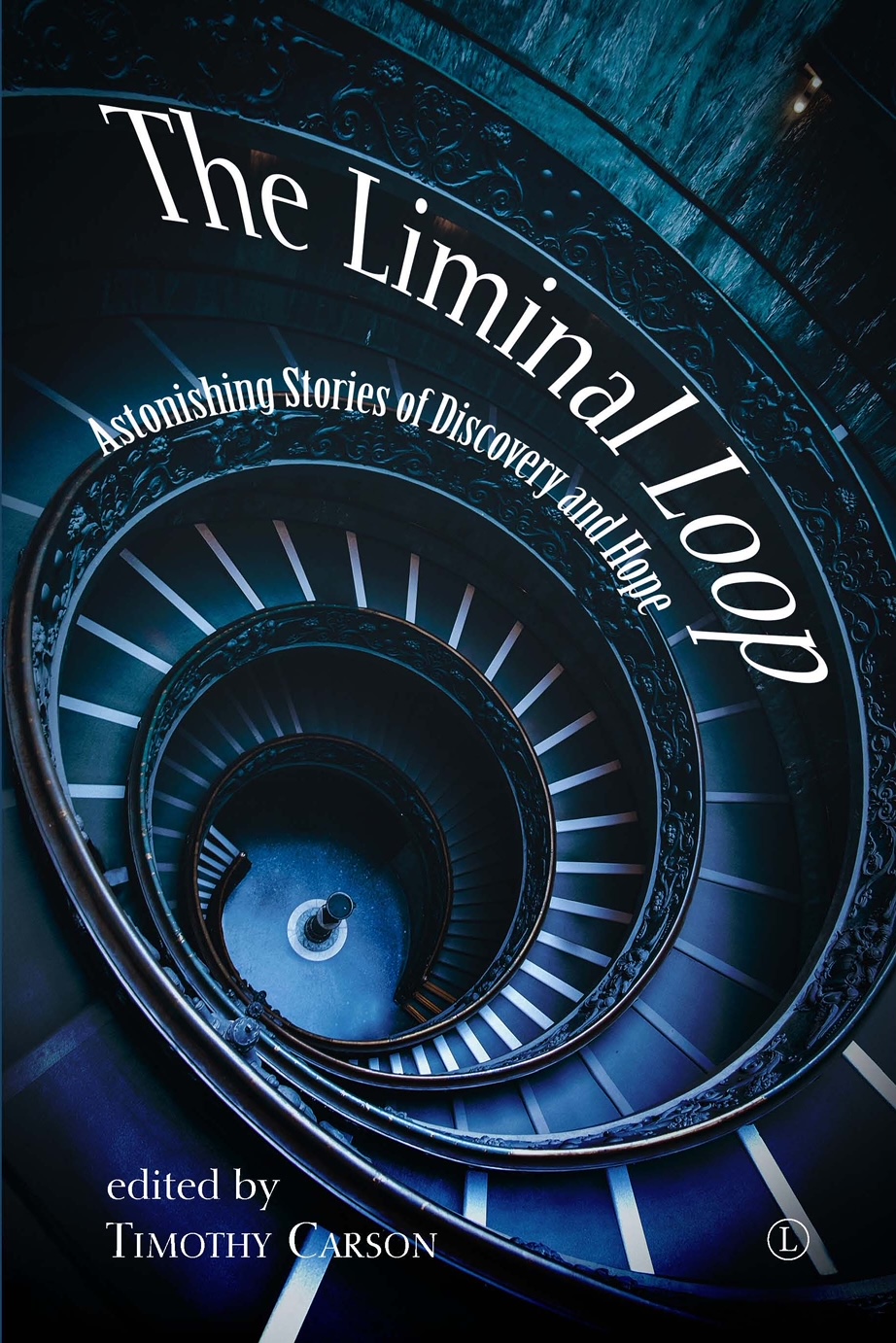
The Liminal Loop: Astonishing Stories of Discovery and Hope

The new anthology of liminality, The Liminal Loop: Astonishing Stories of Discovery and Hope, has now gone live for pre-order through all main booksellers, including Amazon. You may pre-order your copy by clicking here and I ask that you consider sharing it through your networks and social media platforms.

Enjoy this quote in the book from Dr. Elizabeth Coombes, music therapist and professor from Wales:

Liminal spaces present a variety of opportunities for therapeutic work. It is the stepping into another way of being, in this case “musicking,” the act of making music, that brings the encounter and experience alive and permits the creation of a potential space where many possibilities co-exist.

The Liminal Loop is about to launch!

I am pleased to announce that after two years of development, the anthology of liminality, The Liminal Loop: Astonishing Stories of Discovery and Hope, is ready to launch! Eighteen international authors wrestle with the in-between states of existence by way of their own expertise, contexts and experience. Together, they create an unforgettable description of the vast transitional states we cross as well as the ways we can foster resilience and strong liminal leadership.

I am honored to have served as the editor of this project published by The Lutterworth Press, the second anthology of its kind I have edited for Lutterworth. The Foreword is written by singer-songwriter Carrie Newcomer. We have chapters on the theory of liminality, ritual, personal transformation, developing resilience in liminal space, social movements and issues, the liminal dimensions of pandemics, the ecological crisis, education abroad, therapeutic practices and liminality, and liminality and the arts.

Though the book will soon be “live” through all the main book distributors, but you may pre-order your own copy now by clicking here.

If there was ever a time to gather tools around us for understanding vast and confusing times of transition, that would be now!

The Liminal Loop is about to lift off! This new anthology of eighteen international authors includes many voices of those addressing liminaity from their own experience, contexts and disciplines. The combined result is stunning. You may preorder your copy now by clicking here.

“As we enter this wilderness, this domain of the desert, we find it full of fearsome landscapes, wild beasts, and unanticipated peril. What previously seemed normal no longer works or has become irrelevant. Old tools become useless in the face of new challenges. Former ways of perceiving and understanding dissolve within a dream time that is replete with the most unusual and confounding cast of characters. Perplexing and paradoxical questions arise. Time and our sense of its passage become fluid. And yet, we also discover a realm of deep mystery, filled with its own consolations, strange beauty, sudden epiphanies and enchanted traveling companions.”

– Timothy Carson and Suzan Franck in The Liminal Loop

No, this is not the story of Kyle Rittenhouse, who was just acquitted of all charges of crossing state lines and gunning down black men at a protest in Wisconsin last year. The predominantly white jury found him innocent on all counts.

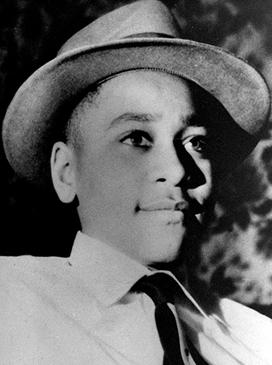
Emmett Till

This is rather the story of Emmett Till, a fourteen year old black youth who was lynched by two white men in Mississippi in 1955. The all-white jury found the two white assailants not guilty on all counts. They walked free. If this sounds strangely familiar, that’s because it is. This is a repeating American story. In short, white people may shoot, lynch and murder black people without accountability. Black people are killed, convicted, sentenced and executed with regularity, especially if they have offended a white person. White juries and judges have been complicit in a pact of white protecting white from the founding of our country. The illusion that justifies such outcomes is the myth of impartiality, which is just that, an illusion. After the rituals of the legal process have bee completed, forgone conclusions assume their disingenuous places, decorated by the symbols of justice.

There is not liberty and justice for all, regardless of how often we have recited those very words in the Pledge of Allegiance. There is liberty for some, and no justice for all. Rather, white power structures insure outcomes satisfactory for a white majority. With a few exceptions.

Emmett Till was neither the first example of this nor would he be the last. His case was not rare. For altogether different reasons Kyle Rittenhouse was also neither the first nor the last and also not rare.

But now, with Rittenhouse’s not guilty verdict, contemporary iterations of earlier white-hooded vigilantes will be emboldened, planting their burning crosses with impunity, brandishing arms, shooting down anyone they define as the enemy of the white race or a threat to their person, all the while hiding behind the Second Amendment.

We have just entered a sinister zone. Or perhaps never left one.

Finally the long overdue bill to rebuild the infrastructure of the nation and refit it for a dynamic future is here. The bi-partisan bill is now law and authorizes federal expenditures to not only undergird the real time needs our country has neglected while other nations have surged ahead, but also generates solid, well-paying jobs and a new era of economic growth.

For Missouri, this translates into very concrete projects over the next five years:

Repair and rebuild our roads and bridges. In Missouri there are 2,190 bridges and over 7,576 miles of highway in poor condition. Missouri will receive $6.5 billion for roads and $484 million for bridge replacement and repair.

Improve sustainable public transportation. Missouri will receive $674 million.

Build a network of EV chargers across the state to facilitate travel with electric vehicles. Missouri will receive $99 million.

Connect every Missourian with reliable high-speed internet. 330,000 Missourians currently lack it. Missouri will receive $100 million.

Prepare our infrastructure for the impacts of climate change, cyber attacks and extreme weather events. Missouri will receive $21 million for wildfires and $19 million for cyberattacks.

Deliver clean drinking water and eliminate toxic lead pipes for all communities. Missouri will receive $866 million.

Improve our airports to bring them up to the highest standards. Missouri will receive $246 million.

Along with other members of my Rotary Club, I volunteer as a “walker,” steadying various riders atop their trusty mounts. The Sunny Oaks Equine program specializes in reaching out to people with a host of disabilities, many of them children and youth. These challenges span a spectrum of ability and age. What they have in common, however, is the healing power of horses. And what a power it is.

I was surprised by my assignment when I arrived at the corral this evening. She was a woman my age, striving to balance herself in the saddle, helmet in place, listing from side to side as she sought out the center point. Her grown daughter intercepted me as I headed in to take my place beside her. She encouraged me to do whatever it took to keep her upright. “You see,” she said in a matter of fact way, “seven months ago mom had a cerebral aneurism that slayed her body and mind. It’s been a long road and she still can’t retrieve even a rudimentary level of the language, the thoughts, and the movement that she used to have. It was all taken from her in a moment.” This was the woman I walked beside, steadying her as she straddled a creature that was easily five times her size and strength.

Several times she mentioned horses from earlier in life, and when I asked her about riding she said that it was something she had enjoyed from the beginning. And so here she was, returning, the same and very much not the same. At one point she had us steer toward the corral fence where her daughter and husband sat on the outside. “Show the picture,” she implored, and the daughter stepped forward with a framed photo taken years ago. It was of her prized horse, an Arabian, one that was a gift from her husband. And there she was, a younger, stronger, whole version of herself, riding, sitting tall and proud in the saddle, a look of total confidence in her face.

She wanted us to see, to know who she was, who she had been, who she felt like even if we could not see it, not the diminished version before us who was afraid of dismounting because she might fall.

There was another rider in the ring, a little girl, probably seven or eight, blonde curls falling out of her riding helmet. She was altogether happy with her four-legged friend. My older charge saw her across the corral and her eyes locked on her, words sputtering out how pretty, how dear, how well she rode. And when it came time for end of season ceremonial awards to be presented to riders, my rider said, “That little girl, she should have, the ribbon. She needs to get the ribbon.”

Somewhere in the depth of memory, the proud rider of Arabians saw herself in this little girl, there across the ring, riding, riding, riding the circle, laughing, smiling, moving, reaching across the ring, across the span of time, body, ability, loss, beauty, and age, until in the end all that was left was the clomp of hooves, many hooves, in the rhythm of life, the repeating rhythm, that no one makes, but hears, receives in riding, traveling far, again and again, loving, longing, and remembering with whatever reins we hold in our hands until our turn is over.