As we explored the resurrection appearance texts taken from the Gospel of John this Easter morning I noted how John’s stories reveal 1st century competing narratives, leaders and traditions – all vying for preeminence. What tradition and which leaders should be viewed as authoritative? For John, a tension existed between Peter of the Jerusalem community, the “beloved disciple” of the Damascus community, and the Mary Magdalene community. He didn’t even touch on Paul’s missionary churches and his Gospel re-fitted for the Gentiles. All of these movements – and many more – existed simultaneously in an incredibly diverse tapestry of Jesus followers.

Following this earliest generation, the diversity continued. There never existed anything like a homogeneous church. There were always movements of Jesus people. This continued until empire eventually established uniformity in creed, Bible and leaders and defined what was and was not orthodox. Then non-dominant groups came to be labeled as heretical and persecuted with abandon.

That simple knowledge of the first generation of Jesus people corrects a false impression that we in the 21st century are the only ones who have ever waded through incredible theological diversity, competing Christian claims and multiple movements. That is not true. It has been that way from the beginning. In our own time and place – in a context of religious freedom, mass communication, wide cultural immigration – the American ethos is incredibly religiously diverse. But not unique.

Of special interest to one of my friends in attendance was the influence of Mary Magdalene, her leadership and community that was systematically suppressed. She was part of the inner circle of Jesus, the first to witness the resurrection, and the one who would share the Gospel first-person authority:

“Mary Magdalene gives me extra enthusiasm and inspiration. Thank you for reminding me of her important role. It’s all very mind boggling but exciting and hopeful!”

Happy Easter. May you find in the empty tomb not emptiness at all. May you find the presence of something absent, a mystery haunting the world, the spirit of life that prowls the cosmos and the hearts of those who dare receive it.

Is the furor in Indiana just the latest tempest in a tea cup? Is it another instance of people over-reacting to sensible protections for religious freedom, a freedom that has eroded for the longest time?

If you were to listen to other governors around the country who support the law and Indiana’s governor, Mike Pence, you might conclude that this is simply a matter of protecting freedom of religion, something already protected in the Second Amendment. All they want is reasonable protection. What could be sinister about that?

What they haven’t talked about is the real issue beneath the surface, one found in the difference between the legislation of Indiana and other states. In other states with similar legislation religious freedom has not been presented as absolute; it stands alongside other constitutional protections such as non-discrimination. Not so in Indiana. Non-discrimination language was conspicuously omitted. Then they hid behind the banner of religious freedom.

The backlash against that decision has been sudden and severe. Among many other organizations and corporations to boycott Indiana was the Disciples of Christ, who decided to move its 2017 General Assembly out of Indianapolis. I support that decision because it put pressure on decision-makers to reconsider the impact of their ideological decisions on, yes, business.

Religious freedom is a good thing. I am religious leader and serve a religious institution. I have a vested interest in keeping it so. But when religious freedom becomes a pass to discriminate against anyone I choose because of my religion we have crossed the line.

This do whatever you want because of your religion reasoning has been used to justify slavery, continue separate but equal social policies and systematically hide and conceal those who have abused children under religion’s banner. It is not acceptable.

As far as the supreme court goes, we have many examples of the high court making judgments on cases that include a dimensions of religious freedom. In the main, the court has provided for maximum freedom when the exercise of that freedom does not harm others or break other laws. Of course, religious freedom is not absolute. Other laws may supersede religious freedom.

The most extreme example is Waco and the Branch Davidians. They intoned “religious freedom” to provide protection for many of their practices. But when a universal law of the land is broken, a law such as one that protects minors, it trumps religious freedom every time.

Is religious freedom an absolute freedom? It is not. It is evaluated along side other freedoms and protections. People knew that when they first read the Indiana legislation. They were correct to object. And now that the legislature and governor are amending the law to make certain that discrimination is in no way tolerated on account of religious freedom we can only hope that, as the wheels of justice turn slowly, others will not try the same trick in the future.

Alfredo’s Brother

Posted: March 28, 2015 in Uncategorized

His name was Alfredo Jimenez. Alfredo showed up at church one day and we got to know one another. He was a musician originally from El Salvador. Most of his adult life was spent away from his home country, first in Costa Rica and then in the United States. His classical instrument was the French Horn, taught to him first by his father. He also played classical guitar and recorded with a band.

For a short time Alfredo played with our band at church. But he was not healthy and eventually became very ill, so ill that he died. We were sorrowful for him. A number of those close to Alfredo gathered to memorialize him.

Fast forward: Through the church Facebook page people followed the story of Alfredo and those who knew him drew our attention to portions of his family who still live in El Salvador – a brother, Carlos, and his daughter. We contacted them and by a miracle of only six degrees of separation we corresponded. On one of the mornings our mission team was in El Salvador Carlos and his daughter showed up to greet us.

Carlos had not seen his brother in over forty years. But then a group of North Americans showed up in his country with stories, a CD of Alfredo’s music, and an unexpected connection that brought the past and present together in an entirely unexpected way. His eyes glistened as we spoke of his brother. He showed us pictures of Alfredo from his youth. Suddenly Alfredo was alive again, alive to a brother who, for all practical purposes, had lost him long ago. He was alive to us in a new way, not disconnected from the world, isolated as a stranger among us, but rather as a family member who finally made it home for one final farewell.

Keep my toaster oven

Posted: March 20, 2015 in Uncategorized
Tags:

At a recent community meeting in which a volunteer advocate from the foster care system spoke, people like myself asked questions about how and why children are placed in foster care. The average number of homes for such a child is surprisingly high. The role of a court-appointed advocate is very important.

As discussion moved to just how short-staffed the system is one person asked the “why are things this way” question. He wanted to know why so many kids are in foster care in the first place. And what about dealing on that level?

Of course, that is an important question. Why are there dysfunctional homes, drug addiction, poverty, unemployment, homelessness, abuse and terrible parenting, all of which lead to foster care for abused, abandoned or neglected kids? All of those are worth considering. But the way he stated it, on the heels of discussing our present situation of inadequate resources to meet the needs, made me uncomfortable.

What he implied was that we should change our focus to prevention. We should address the root causes and prevention. But we can’t wait for a perfect world to arrive before we reach out to children in dire circumstances.

When it comes to inadequate resources to address the rising need for foster care one question must be asked: “Is the system underfunded?” Unless it is adequately funded we won’t have the resources for those kids. The answer is, “Yes, it is underfunded.” And why is it underfunded? “Because the state has shrunk its budget and that had dire consequences for at-risk kids.” And why did that budget and those programs shrink? “Because powerful interests lobbied politicians they control to secure lower and lower taxes for themselves.” And why did they believe we need to lower taxes when Missouri is already on the bottom tier of taxes and state government? “Because they believe that lower taxes is always better regardless.”

And that’s why we have at-risk children poorly served at critical times in their lives. It is because we are underfunding the very systems that could provide better care.

Should we stop addressing root causes and prevention? Of course not. But when the dam is bursting you’d better get a row boat out to the drowning. And by the way, you can keep my toaster oven I bought with my reduced state taxes. I would much rather redirect that money to where it is really needed. Like to children for instance.

To: Prime Minister Benjamin Netanyahu, Israel
From: President Barack Obama, United States of America
RE: My impending trip to address the Knesset of Israel

Just a courtesy note to say that I have arranged a visit to your Knesset next month. It would be swell if you were there, being the head of state and all, but it is not really necessary. I have decided that since diplomacy is now being conducted by our legislatures it is find to sidestep the administration. As a matter of fact, I was so very appreciative that members of your Knesset, members of your opposition party, invited me. I have a humdinger of a speech ready to undermine almost everything you have been working on in foreign policy in recent years. There is moral urgency to this speech because I believe it is important and your opposition believes it is important even if you do not.

Oh, by the way, it probably has not eluded your attention that this visit coincides with upcoming elections in the USA. The things I have to say will excite our base and help get our party’s politicians elected. We are using your Knesset, your country’s decision making body, to accomplish our own goals. Thanks for that. So even though it appears as though your own opposition is ringing your chimes, they ultimately don’t matter, not to us they don’t – it’s really about America! Don’t you see the beauty of it all? I make the powerful statement by simply sidestepping the head of state.

I send you this little note because, well, I like you Benjamin. Since you did this to me earlier – came at the invitation of a congress that wanted to use you to oppose my foreign policy, even though that is the rightful province of the Administration, ambassadors and the State Department – I thought I would just return the favor in a friendly kind of way. Kind of with a wink, I guess you’d say.

See you in Jerusalem! What? You won’t be attending? For goodness sake, why not?

When I encountered EFT (Emotional Freedom Techniques) several years ago I was skeptical. How could tapping on the body’s meridians while surfacing intense centers of emotion release people from suffering? I had long experience in the stock and trade of general pastoral counseling. Was this just more foo-foo from some new agey edge? To my surprise I found out differently. EFT was exceedingly effective with many blockages of mind, body and spirit. And worked in a relatively short period of time.

Though EFT falls under the whole umbrella of “energy psychology” it actually has ancient roots. It relies on the body’s centers of energy as known and utilized in China and India. With ties to both yoga and acupuncture/acupressure, EFT directly interacts with the field of energy that comprises every living thing. The energy itself – when allowed to flow in the presence of challenging or painful aspects – does the work. In this regard it is closely aligned with prayer, meditation and other healing arts.

Practitioners work with clients to tap on themselves while talking through difficult emotions of all kinds. This in turn frees the energy system to release and correct these painful blockages of energy. The result is remarkable freedom – that frequently impacts our bodily pain response. Anyone can do it but trained and skilled practitioners help people address the hidden layers that continue to act beneath the surface.

For the past several years I have been in training for EFT certification. Having completed all that I am now a certified EFT Practitioner. This mostly means that I weave it into my other work with people when it seems appropriate, though some people will come seeking EFT specifically.

For a person of faith and a Christian in particular, EFT is a contemporary healing modality that is consistent with my understanding of physics, the human being and spirituality. My joy comes in witnessing the healing power that unfolds, whether in healing past memories or working with those with PTSD. God is good and provides so many paths to healing and wholeness. How blessed I am to have found another one.

Certified EFT Practitioner Intermediate - 1

The Tale of Two Cats

Posted: February 10, 2015 in Uncategorized

In addition to reading our sacred texts we must also become proficient at reading the text of the world, of our experience. It also has its characters, plot, themes, conflicts and truths. If we have eyes to see or ears to hear, look and listen.

We have two cats that frequent our house. One is our long-time house cat, Baxter, a large, tranquil, secure, affable boy who never met or feared a stranger, whether human or beast. The other is a tiny stray cat whose name, we were told, is Mary. She is obviously the runt of the litter. Her life outside, fending for herself among all manner of threats, has made her hyper-vigilant, bonkers, crazy afraid. It’s how she has survived.

Baxter is happy just being in the same room with you. If he has his food, water and litter box and he gets some attention between naps, he is good to go. Mary shows up at the door and doesn’t know if it is safe inside or out. She paws to get in out of the cold and whines to get out, to take flight, whenever she feels trapped. She is a mass of contradictions.

On the rare occasion that Mary feels safe enough to jump up on the couch and curl up and give herself a bath, she allows me to stroke her. I have learned that one touch does not fit all. The firm rub down I give Baxter would terrify Mary. She is not only smaller – a fourth of Baxter’s twenty-two pounds – but she is more emotionally fragile. I have to use a deft, delicate touch with her, almost letting her close the interval between my hand and her body.

In the same way that any two horses or two hawks require a different touch to handle them, so do these two cats. One is easier than the other. One is more high-maintenance. But if you are going to handle both you need to know the differences and change your approach accordingly.

People are like that, of course; one size response does not fit all. One person wants a bear hug while the next extends a handshake at arms length, a safe moat outside their castle wall. For one person only straight to-the-point talk will do. Their neighbor would be shattered by such candor and needs instead a gentle, gradual word. This person needs lots of attention and that person is just fine with a little. If you are a teacher you motivate one student this way and another that way. So it goes.

If you are a pastor and have served several congregations you know that a different touch is required for each one. Their distinctive personalities require different approaches, a special, acquired touch for each. Like Baxter and Mary, they respond differently to particular leadership styles, depending on who they are and how they developed.

And then there are different cultural sub-groups within a society. They come from different places and have different histories. Some are more like Baxter, having lived a fairly charmed life with access to most everything they need for safety and happiness. Others, like Mary, have suffered adversity out there in the world the likes of which the house cats cannot comprehend. Why would you assume that you relate to them in the same way?

Each cat, each person, each group requires its own touch. If love requires anything of us it is that we expend the time and effort to know what is needed. And then, as far as is possible, we try to make a home for both, for all, figuring out what it is that makes each one feel safe, loved, and valued. We will not always succeed or succeed to the same degree with every one. But the trying is the thing and knowing that we did try.

Selma

Posted: January 20, 2015 in Uncategorized
Tags: , , ,
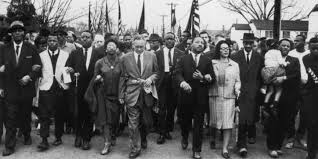
MLK Selma to Montgomery

Martin Luther and Coretta Scott King lead marchers in Selma

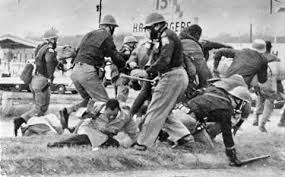
Like many others I recently found myself in a darkened theater reliving a story of fifty years ago, the story of the activism, hatred, sufferings and sacrifices in the heat of one of our nation’s most dramatic transformations. Selma became emblematic of the thorniest racism and discrimination in the land. It was enforced with sheer brutality. Martin Luther King, Jr., and many leaders of the civil rights movement attempted to conduct strategic protests non-violently, something difficult for me to comprehend the older I get. It is no wonder that the name of the city itself, Selma, carries enough freight to serve as the title of the movie without any other word modifying it.

Selma Brutality

Police brutality to the peaceful marchers

Of course, the retelling of the story awakens us from any amnesia about segregation and its fruits. We remember that though the law of the land insured rights to all citizens they were partial rights, sculpted to the preferences of a white dominant culture that systematically repressed the voting of black citizens. That repression curtailed participation in almost every other civic aspect that conveyed power, like serving on a jury, for instance.

However important was the reminder of the obstacles to and content of this movement and the way that moral conviction galvanized the public into political action for change, a great deal of the impact of the film, for me, was found in  the vast complexity and ambiguity of attempting anything good or righteous.

Living is hard and living well is harder. Doing the right thing does not mean that you don’t make mistakes along the way, that human failings don’t come into play, or that leaders are always courageous and never flinch. To the contrary.

Selma Bridge

The march from Selma across the bridge to Montgomery

As we were escorted through the suffering of King and his family, we witnessed the worst of their doubts and fears. Part of our cinematic journey helped us demythologize the hero figure; we moved from romantic ideal to encounter with a brilliant leader who was flesh and blood, who struggled and made progress with uneven stops and starts, who improvised as he went, whose spiritual nature contended with his humanity. That is the person I want to know. That is the person I want to know made a difference in the same way that all of us, by degree, can make a difference.

You don’t want to miss Selma.

Ida

Posted: January 3, 2015 in Uncategorized
Tags: ,

I had heard about this Polish film that portrayed a young novice in the Convent on the way to taking her vows, but had never seen it. I can’t imagine how I could have missed such a treasure.

The setting is post-WW II Poland. Ida, the young orphan-to-become-nun is making a last visit to any living family, an aunt. During her visit she discovers, of all things, that her family background was Jewish. And so the search for how her parents perished began. The short version of that long answer is that they perished as a result of the antisemitism of the 3rd Reich.

Of course, her aunt’s early question persisted throughout the story: So are you going to be the first Jewish nun? Ida had to make sense of not only that – and make some decision – but also come to terms with her family history, her heritage.

After finding the remains of her family and burying them with respect and honor, she finds her way back to the convent, though not to vows … yet. She has some exploration of her life to make before that. But her aunt makes her way toward another kind of exit from this world, out of a fourth story window. It was inevitable.

At the end of the movie Ida is making her way down a road leading in the general direction of the convent. She is wearing her head covering. We assume she is going back for good. But will she? Will she become the first Jewish nun?

Ava Remembers Her Canaries

Posted: January 2, 2015 in Uncategorized
Tags:

The most recent issue of Image Magazine (Winter 2014-15, #33) included a remarkable poem by Emily Rose Cole, one based on a narrative set in 1888 that presents the complexities of a father-daughter relationship. Titled “Allegheny Country, 1888: Ava Remembers Her Canaries,” the poem presents Ava’s love for her canaries and her father’s real reason for having them in the first place, as a fail-safe detector of gas in the mine.

After a beautiful description of Ava’s passion and her father’s practicality, we discover how one night she stealthily slipped out of the house to set all of the birds free. That little act of liberation cost her a whipping, but that’s not all. As she later reflected on her on her deceased miner father she wrote:

“What I have left of my father –
on my back: five raised ridges from his belt buckle;
in my breast pocket: a yellowed newspaper clipping,
his face smudged in ink, and a headline seared on my lips
each night before sleep: Mining Explosion Kills 17.”

Our decisions, our actions, even compassionate ones, are too fraught with complexity to know the entirety of their consequences. Good intentions for one may unknowingly spell doom for another. And there are those times when we must choose, make a tragic choice I would say, between one horror or another, between canaries or miners.

The thing about being a moral being is that one must choose even if it is by not choosing. We sometimes must commit some harm in the attempt to help. The fact that we must choose doesn’t rationalize our part or responsibility in making the choice. But it does help us understand it. The love for canaries created another kind of loss.

Life is not tidy. We have guiding principles, of course. But what do we do when two ethical principles stand at cross-purposes?  Do we carry the yellowed clipping of that story in our breast pocket forever? Or do we somehow offer it up as an offering made in the attempt to walk this life?