 In the year 1968 I was in High school in Wichita, Kansas. In addition to everything else that preoccupied a young adolescent male, the world as we knew it was exploding around us. Vietnam. Civil Rights movement. Kent State. The murders of MLK and Bobby Kennedy. The Democratic National Convention in Chicago. The old world was breaking down. The new, unknown one was being born amidst violent labor pains.
At school we had race riots. The place exploded. Lock downs. Fights in the hallways and cafeteria. The National Guard was called in. They had to bus us home mid-day, twice. Anarchy reigned.
It so happened that in the midst of those race riots I had a trumpet lesson at Wichita State University with Walter Myers, the principle trumpet player for the Wichita symphony. I was way out of my league and must have known somebody to get me into his studio.
Imagine a young highschooler trying to process race riots with his trumpet teacher. When he asked how I was doing I ranted on about what was happening, the ravings of one who hadn’t much thought things through. I remember during my rant watching Mr. Myers walk over to his window, turn his back to me, and look out toward the commons. And once I was done, he quietly said, “All this is the result of generations of racism and discrimination. What we see now is the culmination of generations of hatred.”
So ends the lesson. The moral lesson, that is. And then the trumpet lesson began.
It stopped me in my tracks, his simple statement. And they rumbled around in my young head, these words of a wise mentor. It was indeed the culmination of a long, painful and continuing story. It never took much to light that fuse.
Only later did I put together our legacy of slavery, the KKK, Jim Crow, segregation and ongoing discrimination. Only later did it occur to me how much blood was spilled to right those wrongs. And yet, the wrongs continued. They do today.
The riots we now see in Minneapolis are not about nothing; they are about the public lynching of a black man by white men in power. It is a repeating story. It happens over and over and over again in a multiplicity of forms. So when the cafeteria in my high school, or the streets of Ferguson or the fires of Minneapolis ignite, we shouldn’t be surprised. As Mr. Myers said, “All this is the result of generations of racism.”
As bad as riots and looting are, we have to ask ourselves over and over: Why is this happening?
And then we have to stop making excuses. White people started and have continued this American plague. We are the ones who must stop it.
When you watch the murder of a black man on the pavement, the knee of a white officer on his neck until he dies, you are witnessing a modern day lynching. Not everyone does this, of course, including policemen. But white culture excuses, allows and enables it to continue. Justice is not equal. And we know it.
Compare, two things, if you will: the execution of a black man under the knee of a white man with a black man taking a knee in a football game to protest the ongoing genocide of black people. One is born of violent hatred. The other of indignant peaceful protest. We know which one is moral, though we often attack the protester more than we do the ones committing the violence. The Black Lives Matter movement is about this – recognizing open season on black people. Surfacing it. Not letting it go.
Call this a four-century long pandemic of racism. Every so often there is an outbreak and we have to create a social pause and administer vaccines, waiting for the next outbreak.
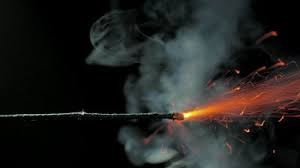
It doesn’t take much to ignite a fuse. And the pile of black powder is enormous. It has been growing a grain at a time.
So remember when you watch the latest footage of riots in Minneapolis that it’s not really about the riots. It’s about what causes the riots. People fighting for their lives.
Imagine what it would be like if, like Mr. Myers, we took a moment to gaze out the window. There is more out there in the void than we want to admit, so much that is oh so uncomfortable. But if we dare face it, the work can begin, including urgent work on our collective tarnished souls.
 At first, the rise of a pandemic elicits shock, dismay, and denial. We struggle to get our heads around the idea that plagues move about by their own volition, catching rides on their hosts, which are us. After we cross the threshold into the full realization that our ordinary life is about to be interrupted, we settle in for the long ride. We witness suffering and death as the result of the virus. And then we realize the second order of suffering, the consequences of plague. Not one society throughout history that was visited by plague did not also experience social and economic collapse. Those twins ride together.
 When it came time to light the candles on the tree they invited the German officer to help light them and he did.
 As I headed out today for an extended ride on the trusty motorcycle (my favorite form of social distancing) I asked myself one question and it circled inside my brain through the entire trip: In light of this social liminality through which we are now passing, what’s going to change forever when we get to the other side?
 In the late 1800s a man named Captain William Fowler determined that he had to remove the lingering superstition surrounding the number 13. To do so he decided to found an exclusive society called the Thirteen Club.
