In the Bleak Midwinter

Posted: January 4, 2011 in Uncategorized

I awakened today with the verse of Christina Rossetti ricocheting among the synapses.  It was her poem of the incarnation, In the Bleak Midwinter. This poem was originally written to be a carol and has been a part of the Christmas carol canon ever since.

Her words name the season of midwinter, of course, but also go to the depths of what it means for God to overfill the heavens and the earth. And if that is the case, what shall I, mere mortal, offer?

In the Bleak Midwinter
 gif
Christina Rossetti (1872)
clr gif

In the bleak mid-winter
Frosty wind made moan,
Earth stood hard as iron,
Water like a stone;
Snow had fallen, snow on snow,
Snow on snow,
In the bleak mid-winter
Long ago.

Our God, Heaven cannot hold Him
Nor earth sustain;
Heaven and earth shall flee away
When He comes to reign:
In the bleak mid-winter
A stable-place sufficed
The Lord God Almighty,
Jesus Christ.

Enough for Him, whom cherubim
Worship night and day,
A breastful of milk
And a mangerful of hay;
Enough for Him, whom angels
Fall down before,
The ox and ass and camel
Which adore.

Angels and archangels
May have gathered there,
Cherubim and seraphim
Thronged the air,
But only His mother
In her maiden bliss,
Worshipedthe Beloved
With a kiss.

What can I give Him,
Poor as I am?
If I were a shepherd
I would bring a lamb,
If I were a wise man
I would do my part,
Yet what I can I give Him,
Give my heart.

Political rhetoric is exactly what it is – rhetoric. And so when we talk about cutting the federal budget, or reducing the debt, or anything else, people rarely provide particulars. Most usually some red herring is thrown out on the table, some easily attacked program, some function with an easily disputed value, and the battle cry is sounded: “Waste! Big Government! Pork Barrel! Earmarks! Cut it!” Well, ok.

What people don’t do is actually look at the budget to see what proportion any one certain expenditure claims. When that happens people become silent very quickly. We have to actually compare functions and what they cost. Then we have to assign a value to them. After all, a budget of any kind is an exercise in values and priorities. We attribute value to that which we support. The more we support it the more we value it.

So, as an exercise in reasoned restraint, I pass on a summary of  a very interesting spread sheet. It was reported in the Dec 28 edition of The Christian Century. You can draw your own conclusions. Hopefully any one of us will be better prepared to fend off any number of uninformed glittering generalities – regardless of who makes them.

Following is the breakdown of a tax receipt for a hypothetical taxpayer who earns $34,140 and pays right at $5,400 in federal income tax and FICA. Based on that salary and tax bill here are some of the major federal expenditures by category:

  • Social Security   $1,040.70
  • Medicare   $625.51
  • Medicaid   $385.28
  • Interest on the national debt   $287.03
  • Combat operations in Iraq and Afghanistan   $229.17
  • Military personnel   $192.79
  • Veteran’s benefits   $74.65
  • Federal highways   $ 63.89
  • Health care research (NIH)   $46.54
  • Foreign aid   $46.08
  • Education for low income K-12 students   $38.17
  • Military retirement benefits   $32.60
  • Pell Grants for low income college students   $29.75
  • NASA   $28.09
  • IRS   $17.69
  • EPA  $11.67
  • FBI   $11.21
  • Head Start   $10.91
  • Public housing   $10.50
  • National parks   $4.27
  • Drug Enforcement Agency   $3.14
  • Amtrak   $2.23
  • Smithsonian   $1.12
  • Funding for arts    .24
  • Salaries/benefits members of Congress   .19

So … make cuts or increases, raise taxes or lower them.  But as we do, consider according to scale where cuts will make any difference. At the same time be able to define, in moral terms because it is a moral issue, why we value one thing more than another.

Then, and only then, will a conversation about a budget and the values that shape it mean anything to anyone.

Bumper sticker politics? Simple unthoughtful one liners? Go to your room without supper.

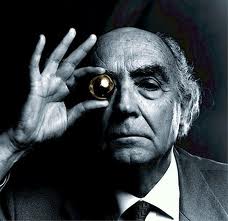
Jose Saramago died last year, on June 18 to be exact. He was the first Portuguese language author to snag the Nobel Prize in literature. I was first made aware of Saramago through his novel, The Gospel According to Jesus Christ. It is a creative biography full of as much imagined background for Jesus’ life as could be dreamed. But the book for which he became globally known was the terrifying Blindness.

Blindness revolves around losing sight and regaining it – on a societal level. Person by person every citizen of the realm goes blind due to some mysterious virus. Those who can see make sure that those who can’t are segregated, confined and controlled, often left to prey on one another in the darkness. In time, one by one, the captors themselves succumb and lose their sight as well. Only a few are immune to the virus and act as guides to the blind, helping to find a way through the dim land.

The story of Blindness is really an allegory about totalitarianism, fascism and the ever present inclination to control the many for the advantage of a few. This theme makes perfect sense, considering that Saramago lived through the fascist dictatorship of Salazar’s Portugal. It was aweful indeed and the reality against which Saramago would push for the rest of his 87 years.

Here is a book the contents of which guarantee a place in the literature that lasts. It speaks to the fundamental human condition, suggesting new ways to navigate through it, a worthy legacy of a life well considered. Blindness will open anyone’s eyes.


The Black Swan

Posted: January 1, 2011 in Uncategorized

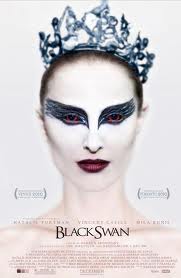
Natalie Portman as Lily

Natalie Portman delivers an unbelievably convincing performance in The Black Swan, this season’s standout for brilliant and dark at the same time. Considering the character she must portray – both light and dark simultaneously, the film reflects that tension and balance.

The young aspiring ballerina, Nina, gives all of her perfected technique to win the role of Swan Queen but as she does there is much, much more to discover. She has fenced off her dark side, the subterranean passion, obsessions and sometimes terrifying force of the dark queen. To get there  she has to face her own interior terrain, escape the chains of childish consciousness and integrate all aspects of her personality.

Some have labeled The Black Swan as a pscho-sexual thriller, and perhaps it is that at least in the plot. On its most profound level, however, it is far more. In addition to integrating the disparate and disconnected parts of her psyche she is also clearly delusional. Is it schizophrenia?

It is hard enough enough for any non-psychotic person to go the distance in such an intense and highly competitive art form. Add in the murky blur between reality and fantasy and it becomes, well, next to impossible. But that is exactly where she is and where the film takes us. What is real? What is illusion? Is the world more than our perception of it or mostly a projection of our own subjective imagination?

These questions are presented by The Black Swan in the most disarming ways because we look at the world through the eyes of the swan, the main character, and are as disoriented as she. We don’t know the difference between the real and illusion either. And like other films that have done this so very well – A Beautiful Mind and Shutter Island being remarkable examples – The Black Swan asks us to look deep down in the soul and go to places we might rather not. The trip is worth the effort.

The Eve of Something New

Posted: December 31, 2010 in Uncategorized

I have a dear friend who is absolutely inbetween everything in her life. Whatever it is, she is inhabiting space between what was and what is to come next. What a place to be. For good or ill every one of us has the chance to spend substantial time in that never-never land of the inbetween. Things get taken apart. But they also get put back together in a new way.

Some fifteen years ago I did research into this phenomenon called Liminality. The word derives from the Latin, limins, meaning threshold. We cross the threshold out of one thing into another. I even had a book published on it (Liminal Reality and Transformational Power: University Press of America).

There are multiple forms of liminality – everything from social disarray to inner dissolution and reconstitution. Some passages are ritualistic – such as the traditional rites of passage found in almost all cultures. Others result from unexpected calamity. Whatever the cause, whether individual or collective, cyclical or once only, we are not left the same on the other side. We can be transformed and for the better by such a passage.

And so the new year of the calendar looms ahead. You and I will have lots of opportunities to pass through liminal space. And we might even allow for the sacred forces at work to reshape us, like the potter and the clay. It’s possible. I’m counting on it, as is my friend who is in the inbetween right now.

Hello world!

Posted: December 31, 2010 in Uncategorized

So we were traveling to visit family after Christmas and before New Years and stopped off at a gift shop located near a place I lived over twenty years ago. I was mindlessly bumping from one gizmo to another when I came face to face with … a face. And she came face to face with … my face. There was that momentary thousand mile stare and then almost simultaneously recognition overcame both of us. That’s nice because sometimes only one person remembers and its embarrassing for both. “Uh, no, I don’t remember you…” But in this case it was remembering that went both ways: “Well, I can’t believe it!” A quick embrace and we’re talking children and where we live and have lived.

Time is a funny thing. Our experience of it is shaped by lots of things – intensity, boredom, memory, hope, excitement. In a way, I think, time rolls over and caves in on itself. Or at least we experience it that way. What seemed long ago is not, it’s really now. And the future is crashing into the present shaping and reshaping it every moment. Once a theologian by the name of Paul Tillich described it as becoming aware of the “eternal now.” It’s now forever and always.

And so there was the now in the gift shop that brought us into remembrance of the now of our past. The longer life is stretched over the canvas the more the distance between those many nows shrinks. Someday there won’t be any gap at all, in me or in the world. Now in now, all in all. Whether that’s the stuff of mystic consciousness or some derivative of the physics of life I’m not sure. But in the same way that musical notes float in a sea of silence, so do our lives. The space between the notes make them what they are. The time around right now makes it what it is, too.

Oh, and happy anniversary honey. How many years was that? It could have been just yesterday, or an eternity, or maybe both.