Good friend Lynelle Phillips, on faculty at the University of Missouri in Public Health, recently took a group of nursing students to Cape Coast, Ghana. The goal of the trip was to expose nursing students to urgent dimensions of public health in a 3rd world context, participate in an international immersion experience and to offer some help in public health education and HIV screenings in particular villages. They were also able to enjoy places of local history and cultural richness.

On one day the students visited the historical locations of the transatlantic slave trade. This included a slave camp and the path the captured slaves took down to a a stream for their last bath and last drink of stream water before they were confined in the dungeons of Cape Coast, where they languished for weeks before being shipped long distances to be sold.

There were four African American young women among the students and for them this visit had special  poignancy. This was the departure point of the ancestors and the remains of many were buried directly beneath their feet. As the group stood on the banks of the last-drink-stream contemplating all this Lynelle writes in her journal:

“Local African women appeared out of the woods as if by magic. They took our African American women by the hand and led them one-by-one into the creek to let the cool water soothe their feet and souls. The good Lord sent them angels this morning.”

Somehow these wise mentor women, whoever they were, took these women by the hand and led them to the stream of their ancestors. They were baptized in the meaning of it all. And after they came out of the waters, without so much as a word, the strange visitors disappeared into the forest from whence they had come.

In 2009 President Obama came to Cape Coast and apologized for the role that America had played in the transatlantic slave trade. So often only a collective apology can address collective sin, regardless of whether I, as an individual, actually participated in it.

Lynelle ends her journal with a reflection on mission trips, what really happens, and prayer. I share it with you now:

“It is the secret riddle of all mission trips – this paradox of giving morphing into receiving. Perhaps it’s God’s little practical joke on modern humanity. On the one hand we privileged Americans are driven to sign on, undergo injections and forfeit our vacation. We are compelled to help. We want to make that difference, even if it is only one random dribble off the hillside…yet in a gradual, puzzling twist of fortune, we become the recipient. What sets off to be a practical journey of service mysteriously winds up as our own spiritual enlightenment. We dine on the love and warmth and character of those we hope to serve. We magically transform from master to servant, from giver to receiver.

I sit and ponder winter/spring, servant/master, giver/receiver … in my place of confused wonderment. Oh my dear Lord, what is your calling for me? Wild geese honk their friendly greeting overhead. Looking down, I notice my hands are more beautiful when intertwined together, their left-right/giver-receiver distinctions fade as they unify in prayer. Oh…maybe that’s it…”

Bat

Posted: February 1, 2011 in Uncategorized

If we had a belfry you could say we had bats in it, but we have no belfry. Even if we did we couldn’t say we had bats be cause there was only one. And the one bat came to worship last Sunday and chose the best seat in the house, way up near the rafters of the ceiling. Of course he was added to the attendance count.

It’s a safe assumption that he is not a bat out of hell, since he has been church shopping and all. And like other visitors who walk through our doors our members greeted him with a measured hospitality. Welcome, they said, looking him over twice. You’re not from around here, are you?

The children were another matter. Anything that spices up church is a good thing. Where is he? What’s he going to do? Will he dive bomb some matriarch and get tangled in her hat?

It’s hard to see church through a visitor’s eyes. We’re so used to being here. Everything is so normal, so as it is. But what is it like to be new, when everything is seen or heard for the first time? Some things you can only discover through an exit interview, a good conversation about what it was like. So as I talked to the winged rodent, we hung upside down together, me off the coat rack and him from the top of the heater vent.  I asked how his experience was.

The organ was a bit intimidating, he said. Big sounds, big echoes. He really didn’t know where it was all coming from or if he needed to move, get out of the way. He was used to people talking, but not making noise at the same time, singing and praying and such. I don’t think he was just being polite when he said that, overall, it was a good experience.  He spent most the time just being an observer, just listening. When I asked if he might come back he was a bit noncommittal. He wasn’t sure if he really fit in with our crowd and really couldn’t know without a few more visits. Of course, you’re always welcome, I said. Inclusion and diversity are important to us, I explained. And what’s more, you have to know how much you blessed us with your presence.

They say flying things remind people of the spirit. And you never know when it might appear, even in church.

Wishful Singing

Posted: January 29, 2011 in Uncategorized

When I awoke this morning, it was not only to the light filtering through the shades into my room, but to a familiar sound, a sound of another season, a sound out of place. The rising and descending tone came from the woods, the voice of a lone bird. It was immediately familiar, the morning whistle of spring.

This bird, however, was not accompanied by any chorus of friends, no antiphonal echo from the far side of the ridge, passing the word from branch to branch. He alone would sing.

The fact that his was the only voice to dare such a song did not inhibit the effort or somehow reduce the volume. He wasn’t merely trying it out to see if it might work; this was the unreserved voice of spring sung in late winter. After the silence of cold and snow, the stillness of animals retreating to their hidden burroughs and dens and nests, this sound shattered the air like an opera star singing full voice in a library. Shush, the people say.

Before I left the house today I looked at the thermometer, checked the weather report and then opened the closet door, surveying a variety of options. There were the big insulated parka, the black overcoat, the checkered scarf from Scotland. Would I need earmuffs or gloves, a hat to sit on my head?

For some reason I reached for one particular jacket, the lightest one in the row. Thin as a windbreaker it could scarcely keep the wind at bay, much less hold in a measure of warmth. I slid into it like someone heading south, to the Bahamas, ready to lounge around on the deck of the cruise ship or walk the steps of muggy jungle ruins. But when the cold air hit my face and crept inside the thin walls of the garment, winter said that it was not finished with me yet.

And I said that I didn’t care, that I’m dressing for the future, issuing an invitation for them to come ahead of schedule. It was hope, I suppose, in which I dressed myself, like a call in the woods that seems untimely, beckoning with a song, like the end is almost here.

Shoveling Snow with Buddha

Posted: January 24, 2011 in Uncategorized

In tribute to our recent snow, of which we’ve had plenty, and in tribute to Billy Collins, of whom we can never have too much, here is his now famous poem of snow and more.

Shoveling Snow with Buddha

In the usual iconography of the temple or the local Wok
you would never see him doing such a thing,
tossing the dry snow over a mountain
of his bare, round shoulder,
his hair tied in a knot,
a model of concentration.

Sitting is more his speed, if that is the word
for what he does, or does not do.

Even the season is wrong for him.
In all his manifestations, is it not warm or slightly humid?
Is this not implied by his serene expression,
that smile so wide it wraps itself around the waist of the universe?

But here we are, working our way down the driveway,
one shovelful at a time.
We toss the light powder into the clear air.
We feel the cold mist on our faces.
And with every heave we disappear
and become lost to each other
in these sudden clouds of our own making,
these fountain-bursts of snow.

This is so much better than a sermon in church,
I say out loud, but Buddha keeps on shoveling.
This is the true religion, the religion of snow,
and sunlight and winter geese barking in the sky,
I say, but he is too busy to hear me.

He has thrown himself into shoveling snow
as if it were the purpose of existence,
as if the sign of a perfect life were a clear driveway
you could back the car down easily
and drive off into the vanities of the world
with a broken heater fan and a song on the radio.

All morning long we work side by side,
me with my commentary
and he inside his generous pocket of silence,
until the hour is nearly noon
and the snow is piled high all around us;
then, I hear him speak.

After this, he asks,
can we go inside and play cards?

Certainly, I reply, and I will heat some milk
and bring cups of hot chocolate to the table
while you shuffle the deck.
and our boots stand dripping by the door.

Aaah, says the Buddha, lifting his eyes
and leaning for a moment on his shovel
before he drives the thin blade again
deep into the glittering white snow.

Almost

Posted: January 22, 2011 in Uncategorized

There was a chapter in which

everything was sacrificed

exceeding all previous attempts

no matter how valiant


In the end nothing more

could be done, or done better

with provisions on hand,

that once seemed adequate


Everything, in its fullness

was undressed, made naked

and reduced to nothing

with torches in the  shadows


That was the microsecond

when the wind stopped

the boom crossed the bow

and the heading changed forever


A new word, almost,

took its place in the credo

an unwritten proposition

the better part of wisdom


To give everything is to leave

no margin for grace or self

or compatriots to shoulder

their part of the load.


Almost carves out the space

everything does not, its crowded

grasp too much, too easily taken,

mistaken and forsaken


Making God everything

means giving everything else

less than everything,

almost everything, enough


©Tim Carson, January 22, 2011

Between Sacred and True

Posted: January 20, 2011 in Uncategorized

Good friend Victoria Moran has written a remarkable article that just ran on Huffingtonpost.com and I have her permission to run it here as well. If you want to connect more with Victoria you can head to her web site, http://www.victoriamoran.com.

With incredible insight and heart-felt reaching for the truest she can find Victoria has written eloquently of life and death, of the reverence for life and finding relative goods when absolute goods are hard won. Thanks, Victoria. Few are nuancing their hearts and minds around the issue of abortion in this deep kind of way. Go directly to the head of the class.

 

In 2009, the abortion rate in New York City was 41 percent of all pregnancies — twice the national average. That’s a lot of abortions. So many, in fact, that New York Archbishop Timothy Dolan has joined with other religious leaders in an effort to decrease the number. The fact that so prominent a member of the always-abolishionist Catholic Church would be involved in a push to simply lessen the incidence of abortion was heartening to me. It shows a degree of pragmatism coming from the religious institution I left as a teenager.

On the issue of abortion, I’m ever on the fence, or, at most, an inch or two to either side. My most firmly held value is what Albert Schweitzer termed “reverence for life.” I take this seriously; many would say that because I extend it to nonhumans, I take it too far. I don’t eat animals. I rescue strays and take injured pigeons to the wildlife rehab. I carry spiders and wasps outside in a cup covered with a 3×5 card. It would only follow that I’d take pause when contemplating the abrupt and apparently brutal ending of a tiny human being’s life, or even a potential human being’s life.

However, I am also a woman. I know that pregnancy protection can fail. It happened to me once. I was widowed, a single mom making ends meet — just meet — as a freelance magazine writer. I had a boyfriend and a libido, and the diaphragm (I was trying to be “natural”) didn’t do its job. I had an early miscarriage. If that hadn’t happened, I can’t say what I’d have done. I do know that women in that situation have, for millennia, found ways to abort pregnancies. Behind the centuries of witch burnings was fear of the village wise woman. Her herbs could cure diseases, and she could both bring new life into the world and, when the mother willed it, prevent that life from coming. That’s a lot of power in the hands of the “weaker sex.”

The traditional lack of power, combined with the anatomical reality that, in a physical altercation, any woman without a black belt is at a distinct disadvantage, fuels the pro-choice, get-your-hands-off-my-body argument. I understand this from a unique perspective: I was almost aborted. In those days, there was (at least as my mother tells it, so I’m not claiming 100 percent accuracy here) a law on the books in Missouri that, although abortion was illegal, one could be performed if two physicians and the father agreed that doing so was in the best interest of the mother who, remarkably, did not have to be consulted in the matter.

Whatever the legislative specifics, my mother was in the hospital in her first trimester, suffering from kidney stones. She’d just been sedated in preparation for surgery when the bedside phone rang. It was Dr. Edna Banks, a female obstetritian who made it in a man’s world by wearing trousers. “If you want this baby,” Dr. Banks told my mother, “You’ll call a cab and get out of there. They’re taking you up for a therapeutic abortion.” My groggy mom phoned for a taxi and snuck out a side door. She knew the hospital well because my father was a young doctor there. He was evidently horrified at the prospect of parenthood, and he had arranged for the procedure with a couple of colleagues.

Obviously, the procedure never happened. This gives me, perhaps, a cockeyed view of “pro-choice”: When the woman has the choice, she might have the baby. Or not.

And there’s more. My father himself performed abortions for thirty years prior to Roe v. Wade. He’d started in medical school when he was desperate for money. Later, women sought him out who were desperate for the service. I was nearly grown when I learned about “my father’s other job.” That’s the name of the one-person show I’m developing about growing up amid uncanny events, such as the week-long hotel stay in my hometown of Kansas City when I was eight. I thought this local vacation was just a special treat. Turns out, it was because my father had terminated the eleventh pregnancy of a woman for whom ten babies were enough. Her husband, a fiery Irish police officer, was threatening to kill me the way my father had, in his view, killed his child.

When I was seventeen, still unaware of my father’s other job, he botched an abortion. A college student, not much older than I was, died. My father went to prison but obtained (that is, bought) a governor’s pardon. It makes for quite a story and, I’m hoping, a gripping show. But as I write it, and rehearse it, and live in it, I’m still on that fence about the topic at its core.

I suppose this is why I’m so pleased that Archbishop Dolan and other clergy are saying, in essence, “While I am doctrinally opposed to abortion in almost all circumstances, I understand that it’s going to happen. What can we do to ensure that it happens less often?” This is similar to something that has long gone on in the animal protection community: the debate between the “rights” people (espousing a vegan lifestyle, no animal experimentation, no exploitation of any kind) and the “welfare” folks (let’s make the lives of food animals more comfortable and the cages of lab animals bigger; let’s keep an eye on the circus and marine parks so that egregious abuse does not occur). These days, the two factions have come closer together — agreeing on the the ideal of ending all animal suffering at the hands of humans. They accept, however, that since it won’t happen this week and perhaps not this century, we can certainly work to mitigate the suffering now.

And my calling, as one imperfect human, is to celebrate and uphold life every time I get the chance. I believe I’m supposed to forgive everybody’s shortcomings — starting with my own, then my dad’s, and moving out from there. And I need to finish My Father’s Other Job, rent a black-box theater that seats two-dozen and start to tell my story.

Grace Notes

Posted: January 19, 2011 in Uncategorized

And now – here is the unofficial, unauthorized, non-expert, entirely subjective endorsement of my three favorite musical discoveries of the past year. Two were produced real time and the third is a new compilation of what have become classics. I know these three are my favorites du jour because they live in my car and I play them over and over. Soon enough they will migrate back into the house to join the ranks of the CDs that used to live in the car but do no longer. Imagine the resentment. “Sure, go ahead big guy, enjoy the car now, but someday real soon you’ll find yourself back in the house, you’ll see. We’ll save a space right here by the rest of us.”

If you’ve seen him in concert, swaying back and forth, sporting his black school boy mane and his signature black tunic and pants, you won’t need much explanation as to why his CD rides in the car. Joshua Bell is the cat’s meow. When he’s not on tour he likes his Manhattan apartment and he likes his friends, a whole bunch of friends that live on a musical plane most can’t comprehend. When you get to Bell’s status you not only have friends but people who owe you because you were a guest at their performance or on their recording. So when he started calling in his markers he had a whole stream of these incredible people show up in his apartment and they started making music, and recording it. The 2009 CD is called Joshua Bell at home with friends. Well, when friends like Sting, Josh Groban and Ravi Shankar’s daughter, Anoushka, show up you know something incredible is going to happen. And so it did. And Bell floated through all these different musical universes like he lived in them all forever.

There is nothing nicer than a home town boy or girl making good, and Missouri has claimed Sheryl Crow ever since she packed up and left Kennett, headed to the University of Missouri and then finally left it all behind in an ever arching vapor trail of stardom. Singing backup for the likes of Michael Jackson was short lived because before you know it people were singing back up for her since she was the little woman with the gigantic presence out in front. At the recent Missouri State Fair in Sedalia a thousand or so of our best friends sat in the stands while she rocked the night away. Of course, there were the standards we all wanted to hear one more time. But she closed with an encore that left us breathless, singing alone at the keyboard, a reflection of her own struggle with cancer – I shall be Healed. And there was also material from a new recording she just put together, and she named it 100 Miles from Memphis. It is a return trip, this project is, and there is Memphis R&B and Motown and some other pots and pans thrown in for good measure. How her soul just comes up an out through those incredible vocal chords I don’t know. But they do, right along with session musicians that don’t miss a beat.


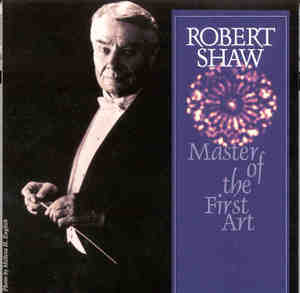
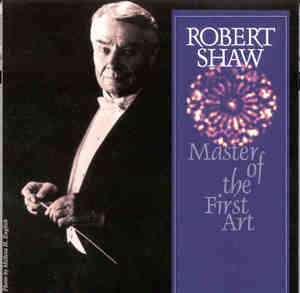
There are masters and then there are masterworks. When TELARC pulled together a collection of master works all of which were directed by THE master of the choral tradition in this generation, Robert Shaw, they simply hit a grand slam. Robert Shaw: Master of the First Art, Vol. 1, covers an unbelievable territory, spanning Renaissance, Baroque, Classical, Romantic,  and Modern periods. The sign of true mastery is found in Shaw’s seamless interpretation, regardless the century or geography. From Orff to Durufle to Brahms the sound is breathtaking. Recorded from 1979 to 1994, the wand of the master drew together the art of the many into the art of the one. It’s remarkable in all respects and because each and every work that was included in the collection has stood the test of time the whole project is luminous. It will stay in the car for a very long time.

MLK

Posted: January 13, 2011 in Uncategorized

At the annual Diversity breakfast of Columbia the usual awards were given – one to an organization and one to an individual. The recipients are supposed to exemplify the values and vision of Martin Luther King, Jr. Most certainly the individual award went to just such a person.

Rev. Richard Blunt, a United Methodist Minister, slowly made his way to the stage to be recognized. By this point in life he is deep in the winter of retirement, having accumulated many years of service to church, community and nation in the cause of justice and equal rights. One of the stories stood out for me.

In the early 1960s the public pool in Fayette barred blacks from swimming with whites. As in many other similar social situations they were not welcome. As far as Dick Blunt was concerned this was entirely unacceptable. Rather than mutter about it under his breath or just talk to those who might be sympathetic to his position, he took a public stand. The end result of months of talking, teaching, writing and persuading was a pool open to all people. What happened to the Blunt family as a result, however, was something else.

They began to receive threats – notes, calls, vandalism. And then came the death threats. For a minister with a family and young children it was more than a little disconcerting. But he stayed the course. And in the end justice prevailed. For Dick Blunt this was the first of many other occasions when he would insist, publicly, that the demand of love required more.

And that’s why this elderly man – who found it difficult to walk even twenty feet from his chair to the stage – stood before a thousand people who gave him a standing ovation. He earned it, of course. And a life like this, one laced with integrity and courage, lends those qualities to the rest of us. Thanks, Richard.

Diaries

Posted: January 11, 2011 in Uncategorized

When Thomas Mallon walked us through his anthology of diaries (A Book of One’s Own People and Their Diaries. Ticknor & Fields, 1984), he provided a peek into the back room of many a creative soul. For some the keeping of a diary or journal has been their way to record and reflect on the daily events of their lives. Many of the entries are mundane and boring, except for the person doing the writing. Other travelers or notable historic figures chronicled events and occurrences that transcended their own lives. And then the artists and writers keep journals, as they do today, as something requisite for the craft; their idea books continue to be a source of material, a record of thinking.

In his introduction Mallon makes an observation about a not so obvious but clearly true dynamic. It has to do with the purpose, the motivation for writing in a journal or diary at all. He says something that I believe is true, namely that we journal and write our notes not only for ourselves. Anytime we write more than a key word or so we are writing to an audience imagined, a listener or reader present or future. We want to communicate the meaning of life not only to sharpen our clarity or retrieve that which shouldn’t vaporize into forgetfulness. We write it to share worlds, to record and archive a mind and heart for others. The fact that these diaries are frequently read much later, most commonly after the death of the writer, only adds more gravitas.

And that, of course, is what a blog is, or a tweet or Facebook entry or electronic column. It’s an online journal or diary with a social thrust. The difference has to do with the audience and the time. The audience could be anyone who cares to follow us. The time is now and not later. Similar to a sermon in real time the electronic medium broadcasts in the now. Its archives become the the semi-lasting record.

The question for this time, it seems to me, is how many journals or diaries can we stand? Whereas in previous times we may have only read some pre-screened body of diaries and been spared all the pedestrian and vapid ones, now we are barraged with updates on what kind of toothpaste the writer has found on sale.

As in everything else now we’re having to screen the data stream, deciding what comes in and what stays out. And that seems so important to me that I think I’ll jot a note about it in my diary. No, you can’t read it. It’s locked up and I’ve got the key. If you like, you can read it after I’m dead.

Canary

Posted: January 9, 2011 in Uncategorized

The old test for the breath-ability of a mine’s air was to post a canary in a cage deep inside the shaft. Because the canary was highly susceptible to changes it acted as an advance warning system for the human miners. When the canary dropped they knew all was not well and needed to get to the surface quickly.

Some people in our society unwittingly serve as the canaries for everyone else. They respond first to the stresses, threats and dysfunction that later afflict the whole lot of us. Like the species that goes extinct just before a thousand others do, the cultural canary short-circuits first.

No balanced, right-thinking, adjusted person carries political conviction to the extremes of mass-murder shooting sprees such as recently done  in Arizona.  When the right social screens and restraints are in place emotion is checked by other internal controls. But there are those persons – mentally ill, radically broken, sociopathic or even holding paranoid tendencies – who are our canaries. They are the ones who break first, sometimes so far in advance of the the crowd that they seem a dramatic exception. News journalists seem to go here first; trying to prove that this one was clearly an exception, disturbed for a long time, clearly unlike the rest of us. We must be safe.

The point about the canary – weaker than others, more easily broken, falling first – is that it is not disconnected from those who are warned. The canary may be the first to go, but most certainly will not be the last.  And that’s why miners who want to survive take the canary seriously. Canary today, us tomorrow.

We can write off the tragic actions of the young killer in Arizona as simply a product of his own malfunctioning brain. Certainly that’s a part of it. But the canary has imploded, after all, which should give us pause. What conditions in the mine shaft took him first, early, before us? Does not our present supercharged social  polarization, the dramatic absence of civil discourse, an extremist political saturation from all directions, destabilize our entire social system? Does it not seep into every aspect of how we view and treat one another? Are there any limits to how much we may hurt one another?

It’s time to muzzle the barking dogs. Demonizing the opposition and attacking personages rather than ideas is always the prelude to much worse. Every action begins with an intent, emotion and motivator that precedes it. The source of murder, said Jesus in the sermon on the mount, is hatred. An internal disposition leads to certain actions. And when we countenance and sometimes contribute to destructive talk we are the ones who are responsible for planting those seeds, fanning those embers, and in the end pulling the trigger.

We could dismiss all this as simply the actions of a lone deranged individual. But that is only part of the story. The more difficult but more complete answer is that the canary is simply more sensitive than the rest of us. Just look in the cage. Something terrible is afoot.