Six Doors Moran Quote

WIPFSTOCK_TemplateIt’s finally here! Sure you can order your own copy of Six Doors to the Seventh Dimension direct from our publisher, Wipf & Stock: https://wipfandstock.com/store/Six_Doors_to_the_Seventh_Dimension

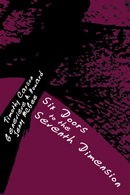
This collaborative devotional creation escorts the reader through the metaphorical house of your life. Creative partners Genevieve Howard, Jenny McGee and I co-created a narrative, artistic, poetic journey that leads from one door of your life to the next. Where it all leads is, well, part of the mystery!

For more information visit our web site at http://sixdoorstoseventh.com. And if you are local to Columbia, Missouri join us for the book launch celebration on Friday, September 5, 6-8pm at the Columbia Art League on 9th Street. Join friends for a taste of wine, cheese, words and image. And of course to pick up your copy of the book if you haven’t ordered it!

By golly the newest book on the block is going live on the Wipf & Stock website in two weeks and then Amazon in six weeks! Hugs to co-creators Genevieve Howard and Jenny McGee!

Take a second and click through to our new website: http://sixdoorstoseventh.com

Coffee Stains on Mark

Posted: July 8, 2014 in Uncategorized

When I am in a retreat setting, at a camp and conference, in nature, traveling in the developing world I instinctively read in Mark’s Gospel. It’s elemental, earthy, direct, powerful in its simplicity. That’s how it was just now as I read and drank my coffee … and accidentally splashed it all over chapter 3. After mopping it up I look at the now permanent stain. “What is going to be highlighted in coffee color from here on?” And it is:

“A house divided cannot stand.”

Rocheport RiverThis old river town, Rocheport, has served as home for many in the passing centuries. It has quietly hosted the Osage Indians as they hunted its woods and fished its rivers, the passage of Lewis and Clark, homesteading of the Boones, the passage of settlers and pioneers toward the Santa Fe and Oregon trails, traveling preachers like Alexander Campbell and Barton Stone, riverboats, then trains, and then roads and highways and bridges. Today it is a sleepy town peppered with antique stores and B&Bs. And it is a new home to me.

Tonight, as I walked the KATY trail along the Missouri River in the cooling evening, the words of Robert Frost came to mind. No matter that they originally emerged in the depths of winter, the darkest day of the year. They work just fine for July, too. For a moment, in the continuity of time and that which reaches beyond time, they became my own:

The woods are lovely, dark and deep,
But I have promises to keep,
And miles to go before I sleep,
And miles to go before I sleep.

A Fighting ChanceElizabeth Warren came from humble roots, truly, not just the stories politicians often weave to help the electorate identity with them. She pieced together the way to get through a state university and law school and began practicing. In time her expertise in economic issues, particularly bankruptcy, moved toward the center of the educational stage. She ended up teaching law and economics at Harvard. From there people began to tap her as a player in the political process, especially as regards the financial industry. After the onset of the great recession she was appointed to create and develop a consumer protection agency, which she did. It was mightily resisted by the very powerful with large interests at stake. The effort eventually prevailed. And then she ran for the United States Senate and was elected. She occupies a rare chair in those chambers, as the Senator with perhaps the most economic smarts of the bunch.

But smarts is not what gets her in trouble and evokes the ire of the rich and powerful. What gets her in trouble is challenging the privileged social and political location of corporations too big to fail, corporations that are bailed out while citizens who are violated by those very corporations are not bailed out.

I recommend this autobiography highly. It provides a glimpse into the role of big money, the buying of America by the rich and powerful and how the uneven playing field that crushes the middle and lower classes continues to tilt. People like Elizabeth Warren are devoted to exposing the truth and doing something about it for the sake of her grandchildren and all grandchildren. It’s a good read. And she’s a fine person.


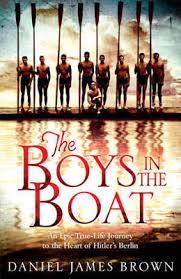
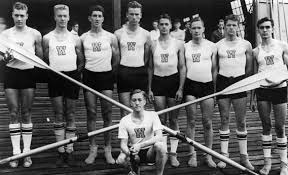
Boys in the Boat book coverI’ve just finished reading the One-Read for Columbia, Missouri this year, The Boys in the Boat. The book tells the story of the University of Washington Rowing team and its gold medal triumph in the 1936 Olympics in Berlin, the Olympics that served as a mighty propaganda tool of the Third Reich on the edge of war.

Of course, I can’t resist. The Boys in the Boat is showing up Sunday.

By the way, did I mention that one of the ancient symbols of the Church is … a boat?Washington Olympic Rowing Team 1936boat?


Scarcity or Bounty?

Posted: June 16, 2014 in Uncategorized

It’s a state of mind, in our personal lives and, yes, in our religious communities. As we talk about God’s bounty and provision with our lips do we really harbor thoughts of scarcity in our hearts? And then, as we tell ourselves over and over that there is not enough, do we simply fulfill our own prophesy?

Now pushing ninety, she volunteered a story from her husband’s funeral:
 

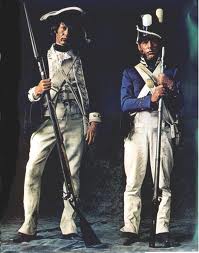
uniforms of the american revolutionMy husband was a proud member of the Sons of the American Revolution. As such he was entitled to a special color guard at his funeral, an entourage of American Revolution vintage soldiers, decked out in their very distinctive uniforms. As honorary pallbearers they stood at attention at both the visitation in the church preceding the service and the graveside.

Just before the church service began and the family was lining up outside the sanctuary doors preparing to process, my five-year old grandson ran up to me, breathless, from viewing his grandpa.

“Gramma!” he blurted out. “Watch out! There are pirates in there!”

The following meditation was offered at the Jazz service at Rocheport Christian Church, May 17, 2014:

Chris Hoke is a writer who works with inmates and gangs in Washington’s Skagit Valley and he recently shared a story about his engagement with one former gang member, Gustavo, and his family (Image, Winter/Spring 2014, No. 80, pp. 66-68).

A gang pastor and jail chaplain invited Chris to accompany him to the house of Gustavo, a former highly-tatted gang member, who was recovering from a self-inflicted wound. It seems that the drunk Gustavo, in a wild attempt to gain the attention of his oblivious father, slashed himself as he stood between his father and the television to which he was glued. The father did not receive it well and just asked him to get out of the way.

When Chris and his chaplain friend arrived Gustavo was standing with his brother out in the driveway leaning against a broken down car. With some encouragement the chaplain persuaded the bashful Gustavo to uncover the wound.

And this is what Chris Hoke wrote about that moment and how, after the bandages were off, the chaplain said they were going to pray for it:

When Gustavo carefully removed the bandage that afternoon between the cars, he held his healing scars out to me. “What do we pray?”

I put my fingers on the jagged pink lines across the soft skin of his butchered wrist. They were still tender. All I could think was, God, come into my veins.

Gustavo hesitated when I said this. Then he took a deep breath and prayed, “God, come into my veins.”

I thought of drugs, of transfusions, God, come into our bloodlines, into our severed families, into the dark gaps between our generations. Come through our new wounds, which … faith can train us to not hide. There is a crack – a crack – in everything, an old poet hummed in my mind as we prayed in the fog. That’s how the light gets in.

***

Chris Hoke reminds us how the cracks – the self-inflicted ones of our own making and those simply acquired through the rough and tumble of living – may provide an opening for the light to get in. Even broken skin gives witness to the broken heart that made it that way in the first place.

The Apostle Paul paints a picture of this as he draws on the clay jars of his own time – containers whose only purpose is to protect and deliver the thing of real value, their contents. The clay jar doesn’t showcase itself, but rather what it carries, even a treasure inside.

When I spent a summer on an archeological dig in Israel we literally walked on pottery shards under foot. They were the cardboard boxes of antiquity. And when they had served their purpose or were damaged they were discarded, smashed, thrown overboard.

We are, says Paul, like fragile, cracked, and flawed clay pots. What we receive and carry is a beautiful thing, precious, beyond compare.

Sometimes, when we are most resistant the light has to find its way into the darkness in peculiar ways, through the cracks in the pots, the broken places in our lives, through the membrane that separates one person from another, by breaching the walls that keep some things out and some things in.

Christians always make a big deal out of the broken bread. “This is my body,” he said, and we know that he didn’t hand off the whole bread but the broken bread. There is something about his breaking that breaks our hearts, breaks us open, and cracks the egg so it falls into the pan. And it’s at that moment we know that the way of love demands no less, a kind of brokenness to redeem the brokenness. That’s what we say happens. And more importantly we say that’s what we know happens.

In the same way that Thomas could believe after he touched the wounds of his Lord, the marks of his suffering, so we often know most we touch the scars; the scars on Jesus’ hands and feet, the scars on Gustavo’s wrist, the scars on the damaged face of the earth, the scars of our own experiences and memories of them. Somehow touching these places releases their hold on us, let’s in the light, opens our veins to let the spirit loose to prowl and renew and heal, to provide a transfusion.

All this makes us rethink our assumptions, doesn’t it? We used to say that God might accomplish things in spite of us. We know the difference between the treasure and the container of the treasure, but we also know that God uses imperfect vessels to reach out to other imperfect vessels. And contact is made because of the vessels, not only in spite of them. Sometimes it is the imperfection and brokenness that makes it possible.

What if, like Chris Hoke, we started thinking of prayer entering through the broken places, the divots rather than the manicured green, the crack in the sidewalk and the flaws that make us human? What if we began to pray through the broken vessels, petitions that gallop through the gaps become royal highways, onramps to the presence of God?

What that means is that every failure, every loss, every broken place may become a pathway for the Holy to enter and a window through which the treasure may be seen. We can say with Henri Nouwen that the “wounded healer” is used of God not in spite of those wounds but because of them.

We carry this treasure in flawed, breakable earthen vessels so that we know for certain that the power comes not from the container but the precious cargo, so that every wound becomes a place where the light gets in.