During the Middle Ages those pursued by by oppressors or the law could find safe haven if they made it to the door knocker of a church. This sanctuary provision came directly from monastic movements and their practice of hospitality, extending it especially to those who might be harmed by an adversary. They taught that one never knew when Christ might show up in the guise of one in need.
Of course, that practice of providing sanctuary for the stranger in our midst has its roots in both the Hebrew and Christian scriptures. We were once strangers and wanderers and others took us in, go do the same. Anytime you reach to one of the least of these you are doing it as though to Christ. Sometimes we entertain angels unawares.
The stranger, the other, the exile, and the refugee continue to show up at our doorsteps. And just as people of faith throughout the centuries have had to decide whether they will provide sanctuary, so do we.
The movie Lone Survivor is based on the true life story of a Navy Seal operation in Afghanistan. In an amazing turn of events members of an Afghan village take in the wounded last member of a Navy Seal patrol. When Taliban fighters come on the scene looking for the enemy the villagers defend him – because of the code of hospitality. Whatever their grievances and conflict with the wounded Seal, he has come under the protection of Sanctuary. Some villagers actually lose their lives in a firefight to protect him until he is extracted. All because extending hospitality and sanctuary is that important. “You prepare a table for me in the presence of my enemies …”(Ps 23)
Those Afghan villagers are my heroes. But not the only ones.
Just last week I was invited to sit in on the governing board of small little church. The only topic of conversation that night was Sanctuary. If we practice the hospitality of Jesus, they asked, what would that mean today? For the next two hours these church members discussed what it might mean to be a congregation that practiced radical hospitality, and in particular Sanctuary for those who needed it most.
They were of course talking about sheltering undocumented refugees. The people around their table included those who had lived and worked internationally and also worked with refugees and immigrants in our community. They asked hard questions about the moral call of faith and what would necessitate civil disobedience if laws were deemed unjust. They reviewed current trends in refugees and legal enforcement. They analyzed current approaches to the same issue in the school system, among police and through city government. They had a comprehensive view. And they wondered – in terms of the will and capacity of their congregation – what part they might play.
They spoke openly about the stark contrast between the kind of justice work being done among little congregations like their own and larger congregations that, though having the capacity to address the issue, choose to ignore or avoid it. They recognized that such congregations are often preoccupied with other institutional concerns. The bigger the church the more political divisions within the church actually keep the church immobilized when it comes to addressing justice issues. And that, ironically, leaves much of the real prophetic justice-seeking moral work to small, nimble congregations that have enough informed and committed members to actually do something.
It was good for me to sit as an observer and listen to those faithful Christians openly discuss this. I am not from a small church. The ways in which we make decisions in a medium large congregation is different on almost every level. Their board looks like one of our committees. But they – like the Afghan village – serve as a sign to the rest of us who are often way too cautious and concerned that we are going to upset someone, or endanger our budget, or lose members, or shorten the tenure of a pastor.
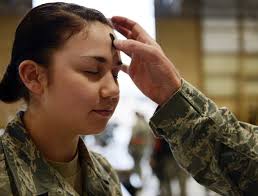 Everyone knows what Mardi Gras is; the last hurrah before the Lenten fast, the final excess before introspective restraint, the dark side on parade before it goes underground. Or more particularly, Shrove Tuesday is the day on which the pantry and fridge are cleaned out before heading out into the forty day wilderness of the spirit.
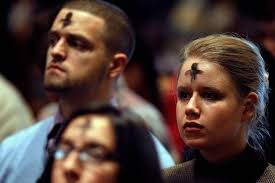 Sunday smeared on their foreheads. Some of them sport the dark sign of the cross for hours. As they come and go in public some think they must have forgotten to wash up that morning.
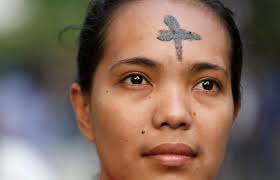 already on. And when we dare to dramatize it yet again we locate ourselves on the map: You are here. Sometimes that feels pretty good and sometimes not. But we are here and not somewhere else. God is always where we are, even and especially in the wilderness places, wandering around with ashes on our faces and navigating by nothing more than faith.
