Archive for January, 2013

The Second Amendment secures certain rights, but not absolutely so. The right to bear arms is one of those. It arose in a time when citizens defended themselves in militias and able bodied men kept their weapons in their homes. They would also assure that they were armed against occupying external forces. That was a remarkably different time than our own. What that cannot mean in our own time is that private citizens are armed like law enforcement or our military. That degree of armament should be governed for the sake of the entire citizenry.

Does this mean that people shouldn’t have their hunting rifles and shotguns, handguns for personal protection? Of course it doesn’t mean that. But friends, as a friend, please lock ’em up if you have them. I’m amazed I didn’t kill someone in the home of my childhood. I played with loaded firearms scattered around our house. I understand now why more fatalities occur as the result of unmonitored firearms in homes – accidents involving children and domestic violence – than out on the streets. The beast is inside the front door, not outside on the porch.

And … your second amendment rights are not more important than the life of my child, or my life, or of my neighbor’s life. It’s a right, but not an absolute one. It’s a freedom, but not an absolute freedom. Like everything else it has limits.

Universal background checks are not unreasonable, but a sign of sanity. Screen out, as far as is possible, those who shouldn’t have access. Will that keep the guns out of all the hands of the crazies and criminals? No it won’t. But it is the right, reasonable, and sane policy for a civilized society. It will discourage and screen out and that’s good enough. We have to be licensed to operate a vehicle on our public roads. Why should the standard be any less for gun ownership?

If guns were the solution to all the violence problems we’re experiencing right now we would have already solved them by now. With 300 million weapons distributed broadly across the nation we haven’t found a way forward yet. Arming every teacher and student in our schools isn’t going to do it. Rather, that kind of approach will destabilize even more. It’s just common sense.

It’s ridiculous to believe that high power assault style weapons and their accompanying accessories should be available to ordinary citizens. The carnage they can inflict is immense. You don’t need them to hunt or for common protection. The only purpose for weapons like that is to mount a siege against either law enforcement or the military. Preparing for anarchy is not the way forward. Get serious.

This is, of course, highly politicized. Rank and file citizens – gun owners or not – are much more moderate about all these issues. They should speak up and decry the fringe positions at the extremities.

Now a special word to my good friends who belong to the NRA, because I have some and you are reading this: There is a difference between the explicit objectives of your organization – gun safety, sportsmanship – and the political agenda of the board of directors of the NRA. They don’t represent you well. I suspect it’s time for you, as members, to speak to your own board. After all, you are the ones paying the dues and allowing them to do what they do. Just take a minute to consider who sits on that board. They are the CEOs of the gun industry. They have a vested interest – economically – in selling their product. They want to remove as many barriers to making profit as is possible. So whatever else the NRA ostensibly says about its mission, the primary focus is lobbying congress. They do it for their financial interest – not yours, the law-abiding citizen gun owner, or the public at large. They will create every argument possible to make the most money and do. They are using you. If I were an NRA member I would start talking about that. I would expect them to cease and desist fostering extreme positions that are so out of step with the typical citizen or sportsman. And then I would probably take my shotgun and go home and redirect my money elsewhere. Suspend your judgement for a minute and take a close look for yourself.

This is not the wild west; it has become worse. The answers that worked before are not working now. As we regain just a modicum of sanity we will need to think about this differently. The golden mean is never easy to achieve, but it is called golden for a reason. Time to find it.

It is a season of presidential biographies for me. I’m not reading them in chronological order. As a matter of fact they are lining up in the opposite order. First there was Kennedy. I’ve just finished Ike. And now I’ve cracked the cover of a new FDR. But speaking of Ike …

Evan Thomas has written a laudable book on president Eisenhower, one based on direct interviews as well as secondary print sources, and its title is Ike’s Bluff (Little, Brown and Co, 2012) You discover why it was so named as you read.

Ike was swept into office following his triumph as the supreme allied commander in the second world war. If you might characterize his leadership style the word restraint comes to mind. He had just experienced the horrors of war and those impressions left him full of resolve – to avoid war if at all possible. He was neither lured into large or small conflicts. And yet it was precisely his willingness to engage in the most horrific option, nuclear war, that may have insured the peace with the rise of the cold war. In a time when the United States had the only viable nuclear armament program that was a position that could be taken. It would change, as he and others would discover, with the proliferation of nuclear weapons and their delivery systems. Mutual suicide would be the result and war, nuclear war, would become the new enemy. But until that time Ike never tipped his cards – to anyone – as to whether he would use the extreme option. It is possible that only he could lead with such a bluff, never tipping his cards or divulging that he would never do so. It was Ike’s bluff. In the same way that only Nixon could go to China, so only Ike could fend off the Soviets – who knew his prowess from their own recent experience. He almost acted as his own secretary of defense.

Simultaneously he discouraged small brush fire war involvements. Go the distance, use massive force if you must. But don’t get mired in intractable no-exit wars. As a result neither small nor large conflicts became the way for his military advisers – some of whom were wanting to do both.  The presidents who immediately followed him – JFK and LBJ – did not escape the pressure Ike resisted and fell instead into the pit of Vietnam.

In public, Ike communicated a calm, controlled, grandfatherly security that was right for the time. His health was terrible and a life-long struggle. And he played more golf than one can imagine. It was a different time and leaders governed differently.

You could say that his second term ended with a whimper and perhaps it did. Certainly he ran out of strength and and lost the determination to contain the “military-industrial” complex that was a wicked stew. As one very close to the Pentagon, arms industry and congress he knew how the dance went. He had always challenged military excess and unnecessary weaponry. He knew how his peers inflated risks and asked for more than was necessary. And he directly challenged, in terms of nuclear capability, how much is enough. How many times do you need to obliterate your enemy, to shake the rubble one more time? But he grew weary like we all do. A new wave of leadership was on the way with the charismatic John Kennedy.

Future presidents consulted with Ike after he left office, especially about his specialty – war and peace. One of those bittersweet moments was when JFK came to Ike after the botched Bay of Pigs, an episode masterminded and pushed by the CIA. Jack Kennedy confessed that he had screwed it up royally. What could he have done differently? Ike asked him one question: Did you have all the players – military, intelligence, political – in the same room at the same time and ask them the right questions in front of one another, or instead speak with them privately, one-on-one? Of course, the answer was apparent. Kennedy had been duped by the CIA absent other input. But that’s all Eisenhower said. He did so because he knew the system so well and was duly suspicious.

That’s what made him a very good president at exactly that time. Each epoch of history requires leadership with its own courage and wisdom. Leaders often fail in rising to that occasion. But Ike did his best and we were probably better for it.

On the Way and Back Again

Posted: January 27, 2013 in Uncategorized

I recently traveled to the West Coast for a conference. The airports provided locales for unexpected conversations both going and coming. You never know what you’ll find out unless you listen.

On the way I indulged in one of my pure luxuries – a shoe shine. I seldom polish my shoes or polish them well. When I have a layover and some extra cash I contribute to the local economy. While the zapatas were receiving some luster I talked to the shoe shine guy. He had just been to the hospital to visit his mother and in fact missed several days of work because of it. There’s hadn’t been very many customers so he was glad I stopped by. I asked about his mom. She is aged and her health fragile. He didn’t know if she could pull out of this one. Somehow we started talking about our fathers, too. And in both our households the fathers were spiritual leaders of the outside things and the mothers of the inside matters of heart. As I’m paying I ask for his mother’s name. It’s Anne, he says. Ok, she’s on my list, say I. And so she is. Anne.

On the way back I have an even longer layover because flights had been cancelled due to weather. Somewhere in my five hour wait I decide to eat so I choose from the array of restaurants. Mexican wins and I order the fish tacos. I always rate the fish tacos wherever I go. Some are good and some are better. These weren’t so good as fish tacos go, but clearly edible. My server is Cheryl. I know because I asked her name. She reached out her hand and shook mine, asking for my name. Tim, thank you. That made it official. She asks what I did for a living. Well, you know, a pastor. Oh, a pastor, she says, thank God for you guys. You matter. In fact she goes right on, my mom just died of cancer and I took her home from Phoenix to Chicago to die, to be near family and the burying grounds. I was there at the last, there for the mystery of her last breath. What a holy moment, I say, and she nods. She says that because there’s not a whole lot to help children understand death she’s going do try to write some children’s books to help that. I say God is probably calling her to this mission and don’t give up on it. Cheryl is crying and other wait staff think maybe I insulted her or something. No, it’s fine, she says. I’m just teary eyed.

And I coasted on home, but where is that, really? Home is wherever people have a conversation about matters of the heart. God shows up with shoes and tacos, moms and kids. Just watch and wait. It will find you. And you don’t have to be in an airport on a layover. Any old place will do.

Finding Your Voice

Posted: January 25, 2013 in Uncategorized
Tags:

GenGood friend, Genevieve Howard, has a wonderful blog called Light To Grow In. Take a look at her reflections. You may want to subscribe to receive a weekly post.

She recently interviewed me about the art of speaking and then blogged about it. You may find it interesting:

3.000 Sermons Later: A Pastor Talks About Speaking

Legacy in the Flesh

Posted: January 17, 2013 in Uncategorized
Tags:
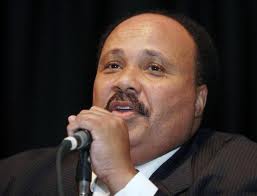
MLK III

Martin Luther King III

The 20th annual Columbia Values Diversity Celebration was held this morning, a schedule change from the typical Martin Luther King, Jr. day. This year’s gathering included a knock-down community gospel choir with narratives from the life of Dr. King. In addition, and as a real treat, the eldest son of Dr. King, Martin Luther King III, was the speaker. In my mind, the fact that he is neither the luminary nor orator his father was is quite beside the point. Really, who could be? Rather, he functions as a kind of walking symbol, the carrier of his parents’ legacy.

As he recast some of the vision of his father we were reminded that though we have made headway on issues of race, there is always room for growth. Poverty and all it cousins, on the other hand, is just as dire as ever. Issues of war and peace continue to plague us. And our culture of violence has continued to gather its feverish steam. Mix in lots and lots of guns into a culture of violence like ours and you have a formula for disaster.

It pleased me that the organizational diversity award was given to Job Point, a group that focuses on locating meaningful work for persons with disabilities. Our recognition of and inclusion of vast diversity in our society must include race, religion, class … but also the way we view and include those with disabilities. Such battles are slow to come and even slower to win. But with legislation like the Americans with Disabilities Act and even smaller scale efforts like our own All God’s Children, progress is made – one small step at a time.

The Limit of Ice

Posted: January 16, 2013 in Uncategorized

The icy blast that lives in winter’s house
announces beginning and end
freezing solid the moving
crystallizing, drying, coating
striking with its steel edge, but
without knowing its brief tenure
shorter than it hopes, because
brother sun broke the seal of clouds
and said let there be light
heat, balance in this house where
winter has its day, but no more than a day

Tim Carson, 2013

We have just introduced a class on ancient prayer practices in our congregation. How does one begin to talk about quietude, listening, practicing the presence of God, and contemplation? Mostly by trying it, along with mentors who help. But also by listening to descriptions.

When the rabbi of Lentshno’s son was a boy he once saw Rabbi Yitzhak of Vorki praying. Full of amazement he came running to his father and asked how it was possible for such a zaddik to pray quietly and simply, without giving any sign of ecstasy.

“A poor swimmer,” answered his father, “has to thrash around in order to stay up in the water. The perfect swimmer rests on the tide and it carries him.”

from Tales of the Hasidim, Martin Buber

In our congregation, Broadway Christian Church, February has become “retreat” month; each weekend is occupied by yet another retreat – women, men, girls, boys. The second of these, the Men’s Retreat, will be held on Saturday morning, February 9. Over the past few years we have followed a sports theme and borrowed liberally from its metaphors. Our mornings have included presentations on the themes along with relevant movie clips and a “clinic” in the sport being considered. Fly fishing brought us A River Runs Through It and Baseball was, of course, Field of Dreams.

This year the sport is Golf and our theme is Finding Your Swing. In addition to the fun golf clinic led by our guest golf pros, our presentations will include sections of the great film, The Legend of Bagger Vance. The question we will be asking, in one way or another, is, “Who’s your caddie?”

As a devotional preparation leading up to the retreat, we have designed a month-long series of daily electronic devotions based on the theme, Finding Your Swing. You don’t have to be a golfer to enjoy them, but it could help. If you subscribe you will receive one devotion crafted by yours truly dropped into your email box each morning at 7am from January 9 – February 9.

Of course, the idea is for men to subscribe leading up to their retreat. But don’t let that keep you from subscribing if you can’t attend or if you are are a woman! The women golfers I know have asked for a special dispensation to receive these, and so they shall …

To subscribe, simply send an email in which “Finding Your Swing” is in the subject line and make your request: “Please subscribe me to the month of daily devotions.” To do so, send your request to iluckenbill24@tranquility.net

Four!

Going Home By A Different Way

Posted: January 6, 2013 in Uncategorized
Tags: ,

(The following meditation was given at the Bluegrass worship in Rocheport, Missouri, January 5, 2013)

I know, I know, every Christmas pageant you’ve ever seen has a cadre of wise men parading around, joining the shepherds around the manger to adore baby Jesus. The reason such scenes fill our churches and adorn Christmas greeting cards is this: They need to condense a much longer three-act play down to a one-act play, a snapshot. The only problem is that it really didn’t happen that way.

What happened was a wondrous birth that was followed a couple of years later by Magi – astrologers from what is today Iran or Iraq – following a stellar phenomenon toward the place where the now toddler Jesus was learning to say No. When they found him they paid homage with the familiar gifts: Gold, Frankincense and Myrrh. The gifts are highly symbolic.

Gold is tribute worthy of a King. Frankincense is used to incense a holy altar, the divine locale. And myrrh is used, well, to embalm bodies. From the very beginning the shadow of the cross falls across the page.

Already in the Gospel story the twin dynamics of attraction and resistance walk onto the stage, and there they shall stay to the very end. On the one hand the light of God’s working in the world rises and draws people from a far and they come like moths to the flame. But at the same time, in rival measure, the forces of resistance attempt to snuff out this light. Both are presented in a cameo appearance, the Magi and King Herod, face-to-face.

The Magi naively seek the council of the local sovereign in whose territory they are traveling. That’s standard operating procedure, of course, and smart, too. You want permission from those in authority even as you provide assurance that your motive is honorable and your visit full of good will. You do not, in any way, seek to do harm.

But the sovereign before whom they appear is not nearly so principled. To the contrary, he is a paranoid ball of hostility. Playing the pretender, Herod poses as one just as interested in the new king who has just arrived on the scene. And by the way, where is he and when did the star arise? I’d like to show just how much I care, don’t you know.

What Herod really wanted was to plan a surgical op, swoop in under the cover of night, and take out the target. The magi, becoming suspicious in a dream, return by another way, cutting a wide swath around crazy king. Incensed by the cunning of the magi, Herod decides to cast a wide net over everything to snag the prey. He carpet bombs the area hoping that by killing everything – every male two years and younger – he’ll hit his target. Never mind the collateral damage. You can hear Rachel weeping still.

And that is exactly the world into which Jesus is born, no more and no less. A baby cries and angels sing. Children play and the swords slash.

Wise people make daunting journeys to catch just a glimpse of the true, beautiful and holy, while monarchs plot its demise in the back room. Just as wisdom makes its appearance, treachery mounts it campaign. It’s all there, the good, the bad and the terribly ugly.

The shocking part, for anyone who has lived more than a few years, is not that these opposites fill the world. The jarring truth is that the battlefield exists in each of our hearts, hotly contested ground sought by Herod and Magi alike. If it were only a matter of an epic battle between good and evil on the outside, we could leave the tale told by the Hobbit or Lord of the Rings. But it neither begins nor ends outside of ourselves; the epic battle always begins and ends as a part of our inner landscape.

If it is true that Christ may be born into our hearts it is equally true that such a birth is constantly tested and contested. The magi live. And so does Herod.

And that is exactly why it is so important for us to separate the story of Jesus’ birth from what comes next.

We might go to Bethlehem one way, that is go to Christ one way, but the way we travel home after that is different, full of danger, risks, and unfamiliar territory. We have been warned in a dream not to travel the same way, but the new way.

Just think for a minute about how your life got you to where you are right now. You may not even be able to piece together all the paths and connections that made it possible. In fact, you may not have been making conscious choices that got you from there to here, almost navigating on auto pilot, following some master script someone else thought you should follow.

Or your path has been fairly deliberate. You chose this way and not that way. But now you come to a turning point because all our roads have them and you suddenly realize that the ways you used to travel aren’t necessarily going to be the same ones that get you to your next place. As James Taylor sings, “It’s a long, long way from anywhere …”

I can tell you that Herod did not return by a different road. He returned by the same road he always took – force, ego, domination, power, superiority. None of that changed, not even in regard to the light of the world. It seems that the presence of the light simply doubled down his resolve to stay the same, to act the same way with the same motives, more of the same.

And if there is a part of us that kills the spirit it is exactly this, the wild impulse to insist on our own way and liquidate any rival to the one we think is in control.

If there is wisdom in our Magi, our little trio of sojourners, it is that they read the lay of the land as they go, listen to their dreams, discern the difference between what is true and false, and chart a new course.

I often think about that in regard to the life story we are co-writing with God. Garrison Keillor once said, “Give up your good Christian life and follow Christ.”

Of course, that is offered tongue-in-cheek, but it also tells a truth. The road that got us here, even the one that seemed the right and proper Christian one, must sometimes be abandoned in order to follow a new path with Christ.

Once upon a time there was a young boy who was always drawn to wandering in the woods. When his father asked him about it, why he did, the boy answered, “I go there to find God.”

“Well, that’s a fine thing,” said the father, “but can’t you find God everywhere?”

“Yes,” said the boy, “but I’m not.”

Our search for the God that is everywhere changes as we find ourselves in different places in the world and different places along our life story. What seemed clear yesterday isn’t so clear today. The challenges of life have changed. The way we need to be in the world has shifted, even if the eternal God is the same. Isn’t God everywhere? Well, yes, but we’re not.

Like the Magi, we have learned a lot about where we have been. We can tell you the story of the twists and turns along the way. We even can provide cautions based on that experience. The Magi know not to return by the way they came, and we know something about the way not to return. If someone asked us we might have a lot to say about the way not to go – from experience.

What is not so clear is where we are heading now, or how, returning home by another road, because it is a way that is not charted on any map. It is the long way home, the unfamiliar way home, but the way we need to take at this point in our life. How do we navigate?

I remember hearing James King tell about an African church he pastored. One of the faithful women who attended each and every Sunday was always accompanied by her dog. She had a terribly abusive husband, and when she died he wouldn’t even allow the funeral to be in the church.

That left this man alone, except for the dog. He began to notice that the dog quietly disappeared every Sunday morning and didn’t return until noon. One day his curiosity got the best of him and he followed the dog on Sunday morning. The dog entered the open-air building, walked to the front where his beloved once sat in her pew, and laid down in the aisle. The man followed, took a seat beside the dog and listened. And what he heard was something wondrous, a story about the God of the universe who leads us where we need to go. His heart was so touched that he gave himself to Christ. And now the dog goes to church with a new master.

We never know what leads us home by a different road. A star may have led us to the cradle and something else will guide us from there on. God may be everywhere but we aren’t, and we will be led from this new place into the new chapter, the next chapter co-written with Christ.

Beneath the madness of King Herod there abides the wisdom from within, our Magi, the dog that takes us where we need to go. Follow, good pilgrim, and trust that the way will lead you where you must go, step by step, prayer by prayer, until you find your peace.

In the coldest months of the year we shelter the homeless here in Columbia. Many cities do the same – differently according to size and need. The Room in the Inn program is one way and this year the doors of Wilkes Blvd. United Methodist Church are open, staffed by volunteers by our many different church communities. Broadway’s week was this one and we will have another later in the winter.

I was familiar with Room in the Inn from two previous churches, one in St. Louis and one in Ft. Worth, Texas. The idea is always the same: screened applicants are given lodging for the night and a humane and safe place to sleep. And volunteers are present during different times for the sake of supervision.

Like many others, I have stayed the night before. This tour of duty is often the hardest to fill because people feel anxious about being there alone. Mostly the night shift is about occupying yourself while the dead tired are snoring away in the next room. Because of that it’s very quiet in the depths of the night. People with no place to call home are usually exhausted. They are just scrambling for survival. And the colder it gets generally the more urgent it gets. Humane communities figure out affordable and humane housing solutions for long-term and critical/short-term needs.

The causes of homelessness are many, but the typical ones include poverty, job loss, mental illness and drug addiction, a financial crisis, and chronic homelessness – which is actually a relatively small percentage of the entirety. We have lots of students in our public schools who are homeless, often doubling up with relatives or friends, couch surfing with friends. People who lost their jobs, homes and cars in this most recent economic meltdown were shocked to find themselves in a shelter looking for help.

As I beheld our population of those seeking shelter last night I recognized some from the previous year. For some this is a way of life. But there are those for whom this is an episode, a chapter of desperation out of which they will climb – with a little help from their friends.

I’ll never forget staying the night one time in my former church in St. Louis. I struck up a conversation with a young woman who didn’t fit the norm of a typical person seeking shelter. She was a college student who shared an apartment off campus with two roomies. When they bailed on her she was left holding the proverbial bag of the lease and monthly rent. It was over her head. She had no family in town. And there she was in a church basement, going to college and wondering how in the world she ended up in a homeless shelter. How indeed.

A lot of myths have to be dispelled, too. I remember one church that was struggling with beginning an initiative for sheltering the homeless. Every irrational fear surfaced. What might happen? How about security? Will we need a fleet of crisis counselors on hand if a volunteer is traumatized? Shall we disinfect the areas the homeless may have touched? (Because we know it’s catching). In retrospect such concerns are exposed for what they are – laced with irrational fears and deep biases. But at the time they seem real to people – especially those who have been isolated from poverty, both domestic and international. They panic. They have no emotional tool kit at their disposal. It takes cool heads who have been around to return sanity to the room.

When I sit in the shelter late at night I occupy myself with a variety of mindless things, reading, games. But sometimes I pray and I pray for everyone in the shelter. I pray that they will be kept safe, that their future may be hopeful. I lift them up as a group like you would fly a kite. I hope it catches a breeze and sails.

I also remember that Jesus was an itinerant, homeless, depending on the hospitality of others. It was he who said that foxes have holes, the birds have their nests, but the son of man has no where to lay his head. The homeless God. And the homeless God is always sleeping with the homeless wherever they are because, well, that’s just the way he is.