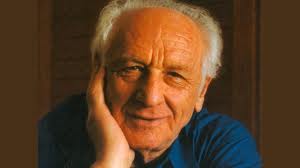
No, Robert Schuller is not dead. Steve Jobs is dead, but not Robert Schuller. The minute that Schuller left the limelight, however,  his legacy started to evaporate. Will the same thing happen to Apple now that Jobs has been uploaded to that eternal App store in the sky?

There is a cautionary tale here. Whenever the kingdom is exclusively built  around the persona of a charismatic leader, their departure spells the beginning of the end.

This does not mean, however, that leadership, brilliance, creativity and vision are unnecessary. Quite to the contrary; of course they are. The Crystal Cathedral simply couldn’t have become what it was without Schuller. And Apple couldn’t become what it was without the rare gifts of Jobs. There is no doubting that.

What is instructive, though, is to watch what happens to an organization once  a primary founder and visionary leaves the helm. Does it continue to flourish? More than one organization has been so leader dependent that it capsized and even sank with that one person leaves.

Continuing and thriving organizations don’t discourage strong leadership from the top, but rather distribute responsibility for it. This distribution has to do with several things.

The first has to do with the vision being carried by the whole group, not just the leader: “It’s ours, so no matter who is leading at present we are all part of the story.”

The second has to do with leadership development. Can the visionary leader actually encourage and facilitate a culture of leadership so that “all of us are always innovating, striving, reinventing, and succeeding?”

Those two pillars, among others, often tell the tale. As far as the Crystal Cathedral and Schuller are concerned it hasn’t panned out so well. The story is yet to be told at Apple.

Leadership remains a crucial factor. But the type and style of leadership – in relation to other leadership and the constituents – is the most telling aspect. If Jobs has delegated and distributed decision-making functions, creative license, and vision-carrying responsibility to others, it may turn out just fine. In death he could become iconic, a symbol of what the organization stands for.

For the church, especially in a free-church tradition like ours, leadership is also crucial. The congregation confers authority on ordained and lay leaders.  And trust, tradition and common vision are the currency by which we live.

Congregations that survive and thrive encourage a shared visionary leadership, the body of Christ that carries our vision long after any particular preacher or parishioner has left the scene.

If you haven’t seen the tongue-in-cheek fictional documentary, A Day Without a Mexican, you shouldn’t wait any longer. A strange disappearance of all immigrants brings life as we know it to a standstill. Anarchy ensues. And, surprise, it’s more than fiction – in Alabama.

What they are learning the hard way is that the crack down on all those illegals, and by extension the legals who have illegals as family members, is that the necessary work force has been gutted. No, they are not taking the jobs of real Americans. Yes, they work the jobs nobody else wants. And they do it with enough hands and cheaply  enough that our whole chain of commerce and service industries come to a stand still without them.

This is the most enormous political red herring of the decade. This is how the sound bites go: If we only get a handle on the illegal immigration issue all our problems will magically go away. Surprise, it’s just the opposite. We are incredibly dependent on them … as we abuse them. No, they are not the crux of the problem. And a crack down, the type of which intimidates and harasses, simply cuts off the proverbial nose to spite the face.

I used to live in the country of Texas.  I discovered something very interesting living there. No matter how big the walls are on the border and no matter how many border patrols scout out the human smugglers and illegals, everybody really just looks the other way. Every Texan knows that they need those people. It doesn’t matter if its for agriculture, building trades, child care, landscaping, restaurants or car washes, the labor is essential. They can’t do without it. And their work isn’t taking work away from anybody else.

Politicians posture in public, acting tough toward immigration issues. But in reality, they think differently. Everyone does. This is a fake issue. And when people act on a fake issue, as though it’s real, like in Alabama, they not only hurt the strangers in our midst, but themselves.

That’s how it always is. You might remember the stern injunction in the Hebrew scriptures about the way strangers should be treated: Remember, O Israel, you were once an alien and stranger in Egypt. So you shall treat aliens in your own land with compassion. You will not take advantage of them. In fact, the treatment you dole out will be the treatment you get back. Count on it.

Like in Alabama. Or anywhere this happens. Let those with ears, hear.

But you’d better watch the trailer for yourself –   http://www.ovguide.com/movies_tv/a_day_without_a_mexican.htm

It’s how it used to be done all the time – baptisms in the river, the lake, the stock tank, the farm pond. Then churches moved baptismal fonts and pools indoors. And that was early, of course. Archaeologists have discovered them in the uncovered strata of our earliest Christian churches in Israel, Jordan, Egypt, Greece, Turkey …

So baptism inside is not a new thing. In fact, having a baptismal pool or font inside the church house (more an urban than rural phenomenon) in 19th and early 20th century America was a sign of respectability. It was a sign of establishment. Today few congregations consider the building of a sanctuary without one.  This is not only for practical reasons, but liturgical and  symbolic ones. The sign of baptism should be present and accounted for every time someone enters sacred space. That’s who we are, baptized.

I get that.

But this past Sunday we had a baptism in a lake. One of our young women plunged headlong into Christ. She and the pastor waded out into the chaos and she plunged to her death, rising out of the waters to new life. And on the shore, brothers and sisters awaited her – with hugs, blessings and  gifts and signs of baptism. Communion followed with a real meal around a fire.

I suppose that when you conduct baptisms in one setting for such a long time, as in my case, and then move to a different one, you notice what’s happening differently. At least I do. The same scripture is read, the same thoughts shared, and many of the same rubrics take place. There is the baptismal formula, the immersion, the blessing. But it’s different, too.

Christians may identify with Jesus’ own baptism which was in the Jordan river. And millions of Christians afterward followed suit. Who can forget the Ethiopian Eunuch (Acts 8:26-38)? An official in the Ethiopian court is driving along in his chariot, passing the time reading portions of Isaiah (there was and is a large Jewish community in Ethiopia). Phillip shows up, interprets the meaning of the scripture and our Eunuch is convicted by the good news of Jesus. Then – and here is the good part – they come to some water and Phillip says, “Why not here?” Actually, as we find later, the Eunuch in the story recites an ancient baptismal formula: “Here is water; what is to prevent me from being baptized?”

The point, I think, is the spontaneity and availability of any water. Now is the time and the creek, swimming pool or pond will do.

Human communities have always ritualized water, appealing to its symbolic nature. This shows up in a multiplicity of cultures and religions. And humans tend to use water in the service of art, by containing it, channeling it, and pooling it. We pour it into a font and then repeat a ritual with it. We wade into the baptistry and it becomes sacred space, transforming space filled with water.

Again, I understand that, I appreciate that. But there is also a special connection with non-human-made water in its natural setting. In a strange kind of dance the human rituals intersect with the power of nature, a force that plays by its own rules, not ours. We don’t pour nature into our constructions; rather, we get poured into it. And that feels much more like grace than works, like plunging into that which is bigger than I.

Many years ago I served a church that was celebrating its 50th anniversary. As churches go, that’s a short time. But every marker is an important one. One evening we had a church dinner and told our baptismal stories. Some were typical coming of age baptisms, a line of young people moving through the baptistry like a row of penguins. But there were also were the breathtaking baptisms, stories of breaking the ice, plunging into the freezing waters, sisters welcoming the shivering babes in Christ back to shore with blankets and warm beverages.

Once I knew of a woman who had lived a hard life. Her history was memorable, too memorable, really. And as she turned a hard corner into a new way of living, she began to walk with Jesus. She was baptized. And every time that the old nightmares came back, every time that the gravity of the old slide pulled her toward her old self, every time that shame or regret came to collect their dues, she just repeated to herself, over and over, “I am baptized. I am baptized. I am baptized.”

For her, it didn’t matter, whether inside or outside, flowing water or still, in a human made tank or the waters of nature. She was baptized into the death and new life of Christ.

It is in our attending to what is happening that it remains fresh and new. Sometimes a change of setting will trigger that. Suddenly, without warning, there arrives some new attention, some awareness of the moment, of the many ways in which we plunge into God.

On this coming Sunday, October 2, we will be celebrating a Blessing of the Beasts on the festival of St. Francis of Assisi. The observance in ancient in origin, practiced widely by Episcopalians who have seemed, more than any other faith group, to claim it as their own. For us in the Reformed/Free Church tradition things like Ash Wednesday, Lent, following the Common Lectionary, and rituals like anointing with oil are recent to us. We are so often late to the party. In the past we often viewed such expressions of faith as too liturgical, which meant, for many, too Catholic. When we finally came out of our sealed canister and became a part of the broader ecumenical community of churches we discovered a Christian world with long-standing practices, many ancient and going back to the beginning. We took some and not others. And the Blessing of the Beasts is one of those.

Along with it comes a largely neglected area in Christian theology, perhaps even a blind spot. It is no surprise that Christian theology has been androcentric – human centered – in most respects. And this in spite of large and broad Biblical affirmations about the role of non-human creation. In the broader Christian tradition the whole creation has often been portrayed as giving witness and praise to the glory of God. Their importance is not solely defined in relation to how they benefit human creatures, but is rather an intrinsic value, deriving from the simple fact that God has created them, given them the breath of life and declared them good.

It was my pleasure this past year to spend some time in Assisi, home of St. Francis. In that place, in those surroundings, it is easy to see how nature -centered his spirituality was. We find in his Canticle of the Sun, for instance, that the whole of creation gives praise to God, takes its place in the economy of God, and that each and every aspect of creation provides wonder for the soul who will see and behold it – not as an object to be used in a utilitarian way, but appreciated for its own sake.

One of the prayers we will use at our Blessing of the Beasts is from Andrew Linzey:

God of the universe,
All creatures praise you:

The birds flying upward to the heavens,
the lumbering of the bear,
the purring of the cat,
the swift legs of the cheetah,
the dance of the hare,
the lapping of the dog,
the descent of the dove.

God of a thousand ears:
The music of your creatures
resounds throughout creation
and in heaven a symphony is made.

Help us to wonder, Lord,
to stand in awe
stand and stare
and so to praise you
for the richness of the world
you have laid before us.

Large and immense God:
Help us to know the littleness
of our lives without you.
You are God beyond our littleness
and in one tiny space and time
you became one with us.

Enlarge our hearts and minds
to reverence all living things
and in our care for them
to become big with your grace
and the signs of your kingdom.  Amen.

Jail or Church

Posted: September 24, 2011 in Uncategorized
Tags:

It was an interview with law enforcement somewhere in Georgia, and the news was that some court there decided that for particular low-threat prisoners they would be given an unusual option for serving their sentence: Jail or Church.

Hmm.

On the surface it sounds reasonable. Give people a choice of incarceration or moral reformation. Who couldn’t use a little of that, anyway? But scratch beneath that surface.

First of all, this generous option defines church as a punishment.  Doing time. Not in a cell, granted, but in a sanctuary. We have already have enough people who feel like they are serving some kind of sentence in church. Parolees for the Lord. Nah, I don’t think so.

Secondly, we really think a crash course in moral education – absent free will and served for an ulterior motive – will bring about some lasting transformation? Even prison chapel allows for choice. No, you can lead the convict to church but you can’t make them drink.

Thirdly, this is presented as a choice, and it is on the surface.  They don’t have to go to church. They could, after all, choose cell block one instead. But who are we fooling here? Anyone would rather read the New York Times on Sunday morning in the back pew rather than from behind bars.

Fourthly, there is this itsy bitsy blurring between church and state. The state should not be establishing – suggesting – a religious practice in any sense, especially as a part of coercion. And why, pray tell, is church the option as opposed to, say, the synagogue or mosque?

Jail or Church. Sounds like a good, socially helpful, spiritually enlightened choice. But it’s not, not really. It is shadows of sending off the morally questionable to a nunnery. It didn’t work then. I doubt if it will now.

The Door

Posted: September 22, 2011 in Uncategorized

It’s not always clear where she might be
in her room, the dining room
or playing games in the activity room

Maybe she is taking her walker for a stroll
a breath of air, then back under
to the work of living or more

When I come we always sit
in the living room with the fireplace
because, I suppose, it feels like home

And at the end of stories, reassurance
that it isn’t so bad after all
I excuse myself and bring our time to a close

Standing, I move toward the steel door
of this institution, this place
with nurses and sign-in sheets

And she, leaving her walker behind
as an unrehearsed ritual
moves to the door to see her guest out

There are the farewells, well wishing
waving goodbye, the one last glance
before shutting the door behind her

If she could, she would turn off the porch light
adjust the thermostat, check tomorrow’s calendar
and look into the children’s room one last time

This door has seen her grace before
a thousand, a million times
It still does

After Czech writer, Arnost Lustig, died last March at the age of 84, a friend put me on to his novels. I’ve just completed two, A Prayer for Katerina Horovitzova and Lovely Green Eyes. Both are set against the backdrop of a world gone mad in the Holocaust of WWII. Lustig should know; he was the survivor of several death camps.

These books are not for the faint of spirit. Lustig writes of the unimaginable in a spare, lean, revealing style,  sugarcoating nothing and placing a human face on everything. And most of all he exposes the evil human inclination become flesh. If you don’t want to revisit just how diabolical our species can become, move on down the book rack to another selection.

There are many publications I enjoy for different reasons. Some inform and some challenge me. Others delight with humor and the day-to-day pleasantries of a time gone by. Lustig’s books are none of these and I don’t enjoy them. One can’t enjoy his books in terms of pleasure because they are not pleasurable. Rather, they are profound. And not everything that is profound makes you want to skip through the sunflowers. Some makes you weep, or gasp, or ask, “What is the human creature? How can this be? Are there any words to describe it?”

These books are not for everybody. But they are for everybody.

Mmmm. Artificial intelligence. I guess.

For practice in the game of chess I play a great big fat computer. It processes a gazillion times faster than me. It looks ahead a mile of possible moves ahead of me. But that’s the point. I want to face off against its great big brain. Well, some patterns of cognition. I always turn the difficulty level to the highest, like playing 10 Bobby Fishers on steroids. Why else bother? And it always whoops me. Bad. Embarrassingly.

The only gratification I ever get is when the computer is calculating and can’t find a way out … right away. It has a little message at the bottom of the screen: “Computer Thinking.” Thinking indeed. It’s calculating within a range of programmed alternatives. They are numerous and complex, but finite, always within what’s been programmed. So I love to get to the place, even if it will prevail, when it spends fifteen minutes grinding its processor. And that’s what it’s doing right now and has been for thirty minutes. It can’t calculate its way out.

This is usually not the case, but it is tonight. And for some reason instead of me playing a “rational” game and projecting all the possibilities out as far as my little brain can, I just stuck with intuition, looking at the whole board. And made some irrational moves, obviously not in its palette. You see, it’s really, really fast and versatile … within the bounds of a finite range of options. But it doesn’t do infinity. And until it can it’s going to keep on grinding, grinding, grinding.

It’s still grinding.

“Computer thinking”

Is it really? What capacity does it have for exceptions, interrupted patterns, paradoxes?

“Computer thinking”

Does it operate with old style Newtonian physics? Does it love Einstein? What about string theory? Does it really have artificial intelligence?

“Computer thinking”

Man I hope it doesn’t stop thinking, if it’s thinking it’s doing. Ok, calculating, following its program. Don’t stop, computer.

“Computer thinking”

It doesn’t know what to do. Like all the times it’s fried my bacon, now it’s like a little crybaby, can’t figure out the little problem.

“Computer thinking”

If it’s thought about it this long, when it does get an answer, will it be brilliant? Or just necessary?

“Computer thinking”

Still thinking it is. If it doesn’t come up with something soon I’m going to run out of things to say. I need to go to sleep. Tomorrow is coming.

“Computer thinking”

Will it think all night? It doesn’t have to sleep, its little plastic and metal and whatever brain. But I do. I can’t meditate on board position forever.

“Computer thinking”

I guess I’m going to leave it on, running, sputtering, talking to its artificial friends and saying things like, “This idiot human being is so dumb that I don’t know what to do with his stupid moves. That’s how dumb he is. He’s so dumb I can’t move, can’t play him. Such a fool.” I’m sure that’s what he’s saying about me.

“Computer thinking”

Goodnight moon, and goodnight red balloon. Goodnight socks, goodnight clocks. Goodnight computer, calculating into the future. If you had a sense of time, like a real sense of present, past and future. But you don’t do you. You’re just Mr. finite.

“Computer thinking”

I’m getting out of here before it stops thinking, before it figures it out. I’m getting out of here before I’m humiliated, have to take everything back, eat my own chess pieces. It’s over for me, beddy by time, chess board folded up.

“Computer thinking”

When I wake up in the morning will the answer be there, like awakening to a nightmare? “Here is what I worked out for you while you were doing your REM sleep cycles, human. Did I mention I don’t need REM sleep? Like  the time you wasted I clicked along until I came up with this. So your move meat sack.” I’m really afraid he’s going to give that to me in the morning.

“Computer thinking”

I can’t take it. Now, later, next week. Inevitable doom? Or … is he going to spin around his processor board forever? Is this how the story ends? That’s my story. He’s stuck and will be. That’s what I’m sleeping on. Just like a little baby.

“Computer thinking”

He’s so arrogant, if computers can be arrogant. Good night. I said goodnight. Light off, door shut, little night light in the bathroom turned on.

“Computer thinking”

<sigh>

On Seeing

Posted: September 15, 2011 in Uncategorized
Tags: , ,

My wife has been doing some long term substitute teaching as a music teacher in an elementary school. In one of her classes she has a darling little seven year old who is on the autistic spectrum. But that’s not all. She’s also totally blind. She has a one-on-one para with her all the time.

Yesterday this little one and her para came into one of my wife’s classes. And the para said, “Go ahead, honey, tell the teacher what you want to tell her.”

And the little girl said, “You’re pretty.”

Come Gently, Rain Down

Posted: September 14, 2011 in Uncategorized
Tags: , , ,

Come gently, rain down
on parched soil, souls
washing grass, and me
every thirsty thing
until fire is smoke
turning windward
a whisp, no more

(Tim Carson, September 2011)