Adelaide Gleason is a member of the Liminality and Contemporary Issues seminar in the Honors College of the University of Missouri.

We live our lives in boxes, constantly in opposition of the Other. The boxes tell us who we are, what we can be, and what groups we belong to. They help us make sense of our world and ourselves, but they also pit us against one another. We put each other in boxes with labels, and then those boxes are used to form a hierarchy, to tell Others that they are lesser-than. This happens throughout almost every part of life: the “popular” kids and the “losers,” those with degrees and those without, upper-class and lower-class, and most prominently, minorities versus non-minorities.


This is the case of race in the United States. Historically, white people have formed the boxes, labeled Black people as beneath them, then used those socially-constructed boxes as an excuse to commit atrocious crimes against an entire race. This wasn’t by chance, by “luck-of-the-draw” birth circumstances; it was a systemic, ongoing, and calculated effort to place one race at the bottom of the social hierarchy. Black people were enslaved, worked to death, and brutally murdered all because white people saw them as “lesser.” It is power which brings out the
evil of humanity.


How can one person do this to another? How can a person go on living, unfazed,
knowing the vicious, barbaric things they have committed against others? In truth, it comes back to the boxes; so long as one person truly believes that they are better than the other, that they are doing humankind a favor by eliminating the Other, they, presumably, can live with the unspeakable things they have done. This is the basis for mass genocide, mass killings, mass death. There’s a degree of horror in realizing that the people who commit terrible crimes often don’t believe they’ve done anything wrong at all.

We were starting our day in a most pleasurable way, eating at one of the most iconic establishments in Columbia, Missouri, the Broadway Diner. Somewhere between the biscuits and gravy and hot coffee, we chatted up owner and master of hospitality, David Johnson. As we spoke of grandchildren and happenings in our rivertown of Rocheport, Kathy’s eye fell on the fresh baked pies resting on the counter. “Where do those pies come from?” Kathy asked. “I bake them,” answered David. And so he does. Dave loves baking pies. The next batch were to be out on the cooling rack in a half hour. “This pie is a special one, the USS Missouri Buttermilk pie,” he said. We believed him. My fork dropped out of my hand into the plate. What’s the story behind that?

It seems that Chris, David’s wife, enjoys eating the pies David bakes as much as he loves baking them. So she sent him a recipe right out of Midwest Living Magazine (Aug 11, 2011). The article told the story of the pie and, most importantly, included the recipe. What was the story?

Once when President Harry Truman boarded the USS Missouri, the pie the steward served was the ship’s famous Buttermilk pie. Truman loved it so much he asked for the recipe. Alas, that request was not to be satisfied. The recipe was property of the US Navy and Truman left without a way to have the pie made elsewhere. Until, that is, the steward retired from the Navy. When he did, right before heading down the gang plank, he tucked the recipe for the USS Missouri Buttermilk Pie in his pocket. Shortly after, Harry Truman received a recipe in the mail. You guessed it, the recipe for the Buttermilk Pie. And that’s how a shipboard secret made it out into the world, to Harry Truman, and finally to David Johnson at the Broadway Diner.

All I can tell you is that the Buttermilk pie melts in your mouth just like Harry Truman said it did. You can smell it all the way down North Delaware Street in Independence until you arrive at the home where Harry was able to have one more bite of the famous USS Missouri Buttermilk pie.

You can drop by and have a bite of Dave’s. Or, more daring, make your own. Here you go:

Ingredients

  • 2 cups sugar
  • ½ cup butter, softened
  • 3 eggs
  • 3 tablespoons all-purpose flour
  • ¼ teaspoon salt
  • 1 cup buttermilk or sour milk
  • 1 recipe Pastry for Single-Crust Pie
  • ½ cup chopped pecans, toasted

Directions

Bake in a 300 degree F oven for 1 hour and 15 to 20 minutes or until the buttermilk filling is set. Cool. Store pie in the refrigerator. Makes 8 servings.

In a large bowl, gradually beat sugar into softened butter with an electric mixer, beating until mixture is well blended.

Beat in eggs, one at a time, beating well after each addition.

Combine flour and salt. Gradually beat flour mixture into butter mixture.

Beat in buttermilk until mixture is well blended. Pour into the Pastry for Single-Crust Pie.

Sprinkle pecans over the filling in piecrust.

This statement was developed by the leadership team of the Christian Nationalism Series hosted by the Seekers Class of the Missouri United Methodist Church, Columbia, Missouri. It is offered in the form of a Credo, affirmations which stand in contrast to the ideology and theology of Christian Nationalists. I hope that it serves as a reflection piece and provides a clear statement for uncertain times.

Addressing Christian Nationalism: A Different Christian Perspective

Theological Vision

We believe that God is the creator of the whole cosmos and that love of God requires us to respect, preserve, and protect all Creation.

We believe that God is the creator of all humanity and that we should strive to welcome, understand, and empathize with all people.

We believe that God loves and is at work among the people of our nation just as God loves and is at work among the people of other nations. God does not extend preferential or superior status to our nation among the many nations.

The Moral Center

We believe there is a moral center, one which we find in our Christian faith and others find in different religions or no religion.

We believe that the life and teachings of Jesus should be the standard by which we evaluate the narratives and practices of all movements that claim to be Christian.

We believe that our Christian calling is to love not hatred, kindness not cruelty, mercy not judgement, and equality not domination.

We believe that we are all parts of the same body and that seeking the common good is a virtuous goal in life. The true test of a Christian moral ethic is the way that resources are distributed not only to the powerful, but to the vulnerable in society.

We believe that fear, anger, and harsh partisanship should not be seen as inevitable and that the best way forward involves listening, compromise, and making decisions with integrity.

Relationship between Church and State

We believe in the separation of church and state. The founders framed the Constitution in such a way that freedom of religious practice and non-establishment of any one religion were protected; the separation of church and state insures the freedom of all citizens, religious or not.

We believe that Christian faith and citizenship are not the same thing, but that they both provide freedom and require responsibility, each in their own way.

We choose to be American Christians rather than Christian Americans. We do not live in a Christian Nation. We live in a nation where we are free to be Christians and free to decide what that looks like.

We believe in the value of a multicultural democracy where we are free to practice our faith and our neighbors are free to practice theirs in their own way.

We believe that loyalty to one’s nation and devotion to one’s God may coexist, but because they are distinct, they should not be conflated. When they do come into conflict, our loyalty to God must be first and patriotism to nation second.

We believe that integrity of belief can only flourish with intellectual freedom and that no one can be forced into an authentic faith. That freedom is protected by open education, a free press, avoidance of censorship, and the absence of religious coercion.  

We believe that theocracy is antithetical to a pluralistic democracy in which citizens make their own moral decisions based on their own values. We should avoid the establishment of a one-party system that codifies one religion’s doctrine in civil law and policy.

The Just Society

We believe that fostering a good and just public life requires respect of fellow citizens, upholding the ideals of democracy, welcoming the stranger and the immigrant, and living peacefully.

We believe that the ideals of a democratic society are protected when all people are free to participate in the discourse of shared governance and where all citizens can vote without interference or intimidation.

We believe that a democratic society is more effective, more responsive, and more inclusive when all social institutions are based upon honest, transparent, and factual discourse.

We believe that our social institutions should provide opportunity, safety, freedom, equity, and justice to all people.

We believe that government is necessary to legislate laws to govern human interaction, to build a stable and unified community with people from different cultural traditions, and to address problems that a market economy fails to solve. 

We believe that our founding documents were remarkable yet imperfect and they must be continually reformed. We are called to engage in that ongoing work.

We believe that freedom of speech is a right and a gift, something that must be used with passion and also responsible care, to expand love and call out hate, to bring together and not divide.

We believe that movements that rely on violence to secure their ideological goals are anti-Christian. We denounce theologies and ideologies that claim God-directed violence and justify those claims with apocalyptic end-time scenarios.

Along with millions of others I just watched Benjamin Netanyahu address a joint session of the American Congress. In many respects, it was a predictable moment: The old warrior made the case for an assertive defence of Israel, beseaching her chief ally, the United States, to join in common cause to protect civilization from the agents of barbarism on all sides, chiefly Iran. We will do this together, he said. We will never give up. Those who dare hurt us will pay the price. And we are very close to accomplishing this latest challenge against Hamas in Gaza, with your help.

That message was received enthusiastically by many. Afterall, Israel has been a long-standing partner in most every way. Overall, the US has stood by her resolutely. Especially militarily. Where Bibi crossed the line, however, was in painting all protesters against the prosecution of the war in Gaza as not only anti-semitic, but standing on the side of evil. Scores of citizens in Israel, the United States, and other nations around the world disagree with that assertion and do not believe that every protest is fomented by Iran and is pro-Hamas. This issue is muddier than that.

If one took a snapshot of Congressional response to the speech on the right side of the hall, the image would be one of enthusiastic unanimity. Yes, that party resonates with strongmen rhetoric and so with Netanyahu. But it is more than that. Why do they extend unqualified support to Israel, regardless of policy or practice? It has to do with a very particular sort of Zionism – Christian Zionism.

Zionism is an ethic-nationalist movement that arose in Europe in the 20th century with the aim of creating and protecting a Jewish homeland, a region corresponding to that of the land of Israel in in the Jewish tradition. That agenda included the rise of the empowered and strong Jew that would eschew victimhood. The Jewish state would provide the identiy and locale for thriving.

Christian Zionism, however, is something else. Like Jewish Zionism, Christian Zionism is committed to preserving the Jewish homeland in Palestine. But they do so for different reasons. Their motivation arises not out of altruistic concern for Israel as a people. It rather derives from a one Christian notion of the conclusion of history in which Israel needs to be reconstituted in order for it to happen. In other words, they need Israel to be established as a part of their own end-times scenario. When they advocate for Israel they are standing for something else. For them, the state of Israel is a means to another end that doesn’t have a lot to do with Israel itself.

Earlier generations of Christians saw the establishment of Israel as a moral necessity following the Holocaust. They made pilgrimage to the “Holy Land” to walk in the places cited in the Bible, both in Hebrew and Christian scriptures. But Israel was not seen as little more than a means to another end.

In more recent times a different Christian orientation has arisen in powerful quarters. Unquestioning support of Israel arises out of their eschatology and convictions about what is required to usher in the end of days. Israel is seen as a part of that chess game. Therefore, political decisions are made on the basis of serving that theological end. For example, from the point of view of Christian Zionism, a two-state solution for the Israel-Palestinian quandary is an impossibility. In this understanding, the Palestinian side of the formula is, well, beside the point. Only one thing is the point: keeping Israel established right where it is. Which means the Israel foreign aid piggy bank will always be available, even in the presence of strong humanitarian reservations.

That is why Netanyahu’s speech included explicit references to Israel and the land in the Bible; he knows very well what matters to his audience. He named the superstars every Christian would know by heart – Patriarchs, Kings, and Prophets. For Christian Zionists, this reinforces what they already believe; supporting Israel regardless is a theological mandate.

Christian Zionism is not only native to many forms of Christian fundamentalism, it has also become a plank of Christian Nationalism orthodoxy. In this religious-ideological hybrid, Christians believe that God has ordained the United States to be a Christian nation and intended a theocracy with one religion and one autocratic politic. To be a devout Christian and patriotic American means supporting Israel. Not for Israel, but for America.

When Netanyahu slyly told the story of brave college students defending the American flag from being burned at a demonstration on behalf of Palestinians in Gaza, he knew what he was doing. Immediately, the Christian Nationalists in the chamber took up the chant, “U.S.A.- U.S.A.- U.S.A.” Christianity, Israel, USA. One thing.

The current Speaker of the House, Mike Johnson, is one of those, but by no means the only one. As long as he is Speaker there will be no serious consideration of Israel’s action in Gaza or any other action. Israel will not be held to the same evaluative standards as are held for other nations. The Israelis know this, of course, and play the Christian Zionists as they always have. They know that these Christians view them as a means to another end. But then again, more than one can play that game: Believe what you will about us, Christian Zionists. Just keep sending that check.

The world was shocked last October 7 by the savage attack on Israelis by Hamas. The surprise attack left over 1,200 dead, including many who were tortured, raped and taken hostage. It was a dark and brutal day. Nothing can ever justify such an act. Shock waves crashed over Jewish communities everywhere. In retaliation, Israel conducted a military offensive to root out Hamas, protect itself, and prevent such incursions from Gaza again. The scale and type of response, however, brought about massive destruction, the deaths of over 30,000 people, the large majority of whom were non-combantants, women and children. The infrastructure of Gaza was destroyed, including hospitals, schools, mosques and churches. Israel’s prime minister and war cabinet prosecuted a war that was far beyond proportionate. The result of this outsized military action in Gaza has created nothing short of a humanitarian disaster. Sadly, regardless of American dipolmacy and requests for a cease fire and cessation of indiscriminate bombing, the destruction continued. And yet – this is the moral and political key – the United States continues to provide military aid and hardware that makes all this possible.

The history of conflict in this region is long and complex. Continuing injustices maintain simmering resentments and a cycle of retribution. Outside terrorist organizations fuel additional violence. Hopeful diplomatic resolution is often scuttled by actors who do not want peace initiatives to succeed.

All that said, it is not lost on university students that the United States is not free of culpability in this conflict. As a result, students across the county and indeed the world have engaged in on-campus protests. For those of us who have lived for more than a few years, this kind of response is not a new phenomenon. Students often represent a moral barometer on social issues, including but not limited to war and injustice. They often organize and engage in prophetic speech and action.

Siding against protesting students and instead aligning with those who attempt to repress them almost always ends up on the wrong side of history. Nevertheless, some universities, cities, law enforcement, and expressions of the military have attempted to break up protests, arrest students, tear down encampments, and exercise violent reprisals, including tear gassing, forcible restraint, and sometimes worse.

On May 4, 1970, the Ohio National Guard descended on Kent State to exert authority and maintain order. As a result, four unarmed students were killed. Others were harmed and wounded. It was entirely unnecessary. Horrific things like this happen when force is brought to bear when citizens peacefully engage in free speech and right of assembly.

If better angels were summoned in such a time as this, I believe they would counsel restraint, slow response, and free expression. University administrators would be talking with students, and doing so in public spaces. Use of law enforcement would be limited to incidents of violence or expression of hate speech.

Easy? No, not at all. But in a free society, one in which we want to tilt away from authoritarianism and the use of law enforcement and the military against our own citizens, the effort is worth it. We generally have a sad track record in how we have responded to free speech and the right to assembly during hard public conversations.

We could try to get it right this time and avoid repeating one more Kent State.

Once Is Never Enough

Posted: February 24, 2024 in Uncategorized

Once is Never Enough

I’ve heard it said more than once,

from more than one mouth or pen,

that once is never enough,

which is a truism true enough,

If you are talking chocolate shakes,

walks in the springing forest,

Mozart’s 40th Symphony,

winding the clock before coffee,

or laying satisfied and spent

in the late afternoon.

Once may never seem enough.

But some contestants deserve the title

of never bearing even one repetition,

because unrepeatable is what makes them

what they are and remain.

Never again is their stubborn declaration,

unmatched by weakening do-overs.

They stand unrivaled, wearing the garland,

always outstretching the competition.

But there is another list

of the once-onlys, the rarities,

floating over and above time,

that are not determined in any way

by perspective, wanting, or waiting.

These are the one-time-by-design,

most distinguished things

made so by being none other than once:

The azure, crystalline clarity

marking everything that came before

and would after, this great divide.

Getting born into this body

the one time, mind you,

and then getting out of it, too,

the cry the first time

the whisper the second,

both one time, because any more

would not only be impossible,

but withdraw wonder by degrees.  

Some parts of this one story

deserve to stand alone,

unrepeated, unparalleled, unedited.

Here is to you, the once only thing,

which stays that way,

can’t not be that way,

revealing every fearsome limit,

among winsome love,

and deepest admiration.

(Timothy Carson, February 2024)

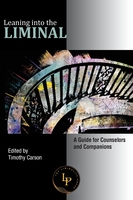
During the month of February, a deep discount is offered on purchases of Leaning into the Liminal: A Guide for Counselors and Companions (The Liminality Press, 2024). This book is designed as a guide for those in the counseling arts, including therapists, counselors, chaplains, spiritual directors, religious leaders, and coaches. By clicking the link you may order a deeply discounted launch version. Get yours or one for that counselor friend today!

Click here to order your discounted copy!

Leaning into the Liminal: A Guide for Counselors and Companions

Carson, Timothy L

Buy Now

I was recently a guest on Tom Rundel’s podcast, Liminal Living. The episode is “This is your brain on liminality.”

I hope you enjoy it! Click here to listen in.

Carrie Newcomer tells a story that is at once familiar and unfamilar to me.

The familiar part of her story is the description of Christmas Eve for a typical parish pastor. In my case, after a long season of preparation leading up to Christmas, Christmas Eve arrived with several services, the last of which was ordinarily some midnight candlelight service with communion. In the wee hours of Christmas morning, after the last soul left the church, the last light turned off and doors locked, I usually stood outside in the cold night looking up at the stars, taking a contented sigh of relief. That was the moment when Christmas finally settled in on me. But the unfamiliar and more interesting part of Newcomer’s story is this:

The Scuff and Scrape of Feet

Posted: December 23, 2023 in Uncategorized

As the dog walked me in the early morning dark, I started listening to the sounds of our feet on the ground. Even though I try to walk lightly and quietly, my age and weight makes silence a near impossibility. The repetitive scuff and scrape of my sandals on earth took me back to other scuffing and scraping in the dark.

In the distant past of my young adulthood I spent a summer in Bangladesh, visiting the work of an NGO and shadowing their staff. I travelled everywhere by any means – walking, bus, the back of a motor cycle, rickshaw, river boats, crossing over rice paddy rickety bridges. And I ended up in a combination of locations difficult to describe. Small villages, leper hospitals, disaster recovery programs, tiny retreat centers, literacy programs in the shanty slums.

Our base camp was Dhaka, the capital city. Like so many others, we lived in a walled house inside the city. You can hear the flurry of activity on the street outside those walls at all hours. By 2 or 3am it gets quiet.

More than once, as I lay dreaming in the pre-dawn dark, I heard the scuff and scrape of a silent procession on the street. It was like a muted percussion section. This was the sound of the sandaled feet of Bangladeshi women walking to work in the shirt factories.

Factory work was one of the few plentiful jobs in the city. They always needed cheap labor. Bangladeshi women could provide that for pauper wages. Their hours were long, the conditions dirty and cramped, and every so often a factory would collapse on them. The owners never protected them or improved those conditions. Inspectors were routinely paid off. But that wasn’t the most important factor that kept the wages deplorable and the conditions marginal.

Large multinational corporations like Walmart came in with shirt contracts that the owners couldn’t say no to. The offers were rock bottom, making it almost impossible for the manufacturers to make a profit, improve their buildings, and pay their labor force. These contracts insured low costs for people like me, when I look for a shirt at Walmart or some other multinational chain. My cheap shirts require cheap labor and poor conditions elsewhere. As the end of the supply chain, my demands for low prices make that what it is.

The scuff and scrape of feet comprise a symphony of sorts. It is the unending song of those who must walk for their lives, inside their inhumane cities, or across miles of terraine to escape the spectre of despair. Every time I hear the sound of my feet in the dark, I remember them.

I also imagine the sound of feet and hooves of another young family escaping the disaster that loomed over them. So vulnerable were they, what with the young child in their care. They fled under the cover of night, escaping harm on the way to safety, from Galilee, down south through Gaza, across the border into Egypt, where the migrant family would wait, try to survive, and hope for better days to come.

Scuff-scrape, scuff-scrape, scuff-scrape.